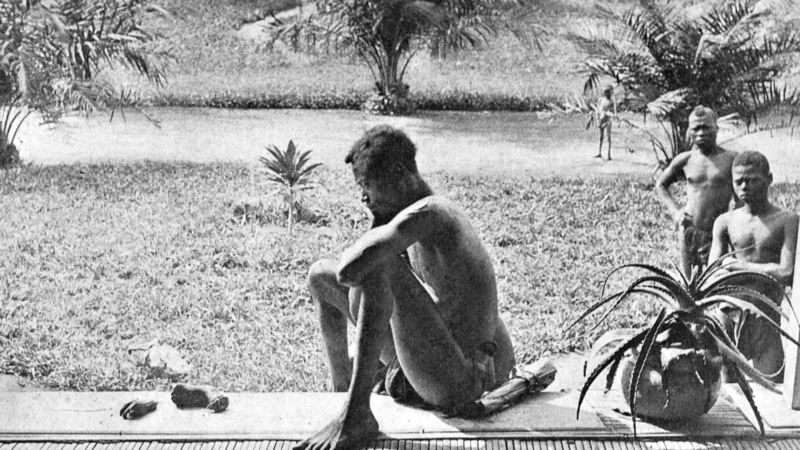
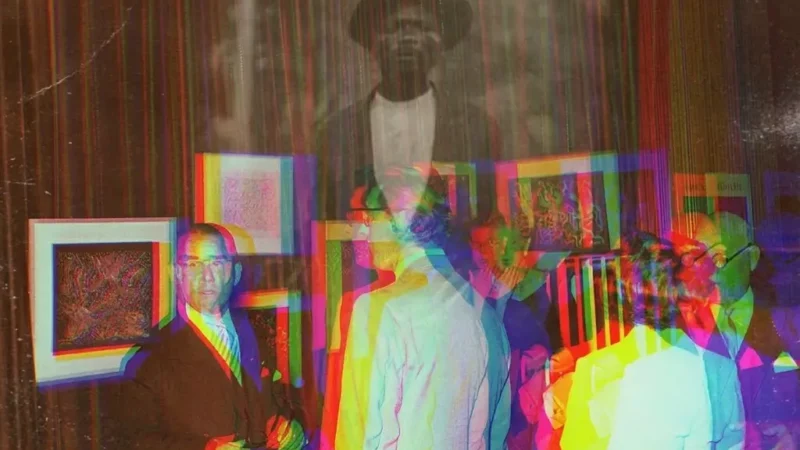
Nsala of Wala with the hand and foot of his daughter Boali.
Articles Essays

Her name was Boali

The photograph exists because a father from Wala decided that his daughter’s limbs should not remain private receipts of the company’s shortfall. He carried them to the house that stood outside the system, the one place that kept records and made images that could leave the forest. What he hoped would follow is not in the record. Everything that did follow belonged to others. He came into the archive carrying the heaviest thing in the world and left it with one sentence.

Pinned
No Comments Read More
orchestre symphonique kimbanguiste
Essays

The Nganga, the Prophet, and the Orchestra

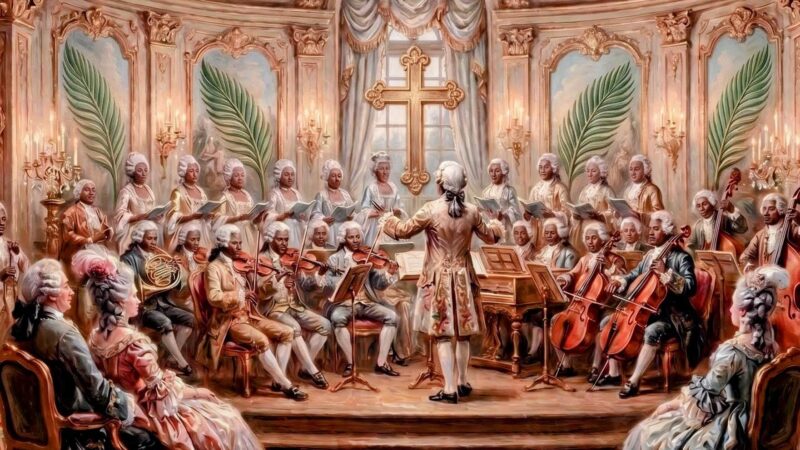
The Europeans in the audience were hearing an African orchestra play European music. The musicians on stage were playing Christian music. I sat between those two sentences for an evening in Kinshasa in November 2022, and have been turning them over ever since. The story of how the Orchestre Symphonique Kimbanguiste came to play Rodrigo in a wedding hall runs back to 1706, to a Kongolese woman burned at the stake for preaching in her own language, and forward through a century of a faith the West has never quite known how to hear.

No Comments Read More
"Pembeni mwa nafsi" (Au bord du soi): Mihalina Nyota's Meditation on Vanity
Meet the Artwork

“Pembeni mwa nafsi” by Mihalina Nyota

Mihalina Nyota Buzilu paints vanity with the oldest equipment the theme owns, a mirror and a skull, and makes the arrangement carry her own point: a life that should be welcomed with integrity and gratitude, lost instead to the craving for admiration. In Pembeni mwa nafsi (At the Edge of the Self), the reclining body is painted cold and the skull is warm. In a short video, she explains the vanity, the narcissism, and the death her subjects work to forget.

No Comments Read More
Article 15, Débrouillez-vous by Chéri Chérin
Essays

Article 15: The Unwritten Constitution of the Congo

When the state provides nothing, you seize what you can and invent the rest. To exist in Kinshasa is to live by Article 15: Débrouillez-vous. Explore the unwritten constitution of the Congo, where the daily hustle dictates everything from a policeman’s traffic ticket to the art sold in local ateliers. Step off the main boulevards to discover how this relentless pressure acts as the invisible gears keeping millions alive while the elites watch from the hills.

No Comments Read More
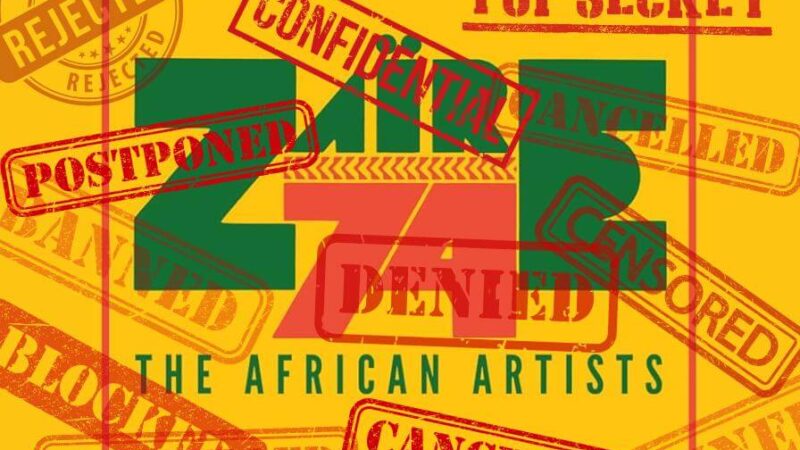
Album cover zaire 74 the african artists full of rejected, denied, banned, etc stamps
Essays

The Gift and the Void: The Delayed Legacy of Zaire 74

I have already written about the Rumble in the Jungle, or rather how it was neither rumble nor jungle but a clash of two titans on sacred ground in Kinshasa. I have also written about the long rivalry between Franco and Tabu Ley, how their competition bent Congolese rumba into new shapes.
Once those two stories sit side by side, Zaire 74 is no longer background. It becomes the missing piece between the fight and the music, the nights when Ali’s city opened itself, gave its best, and then watched much of it disappear into a vault. This piece follows that trail into the stadium and into the tapes that slept for decades. If you want to know how a homecoming could turn into a silence, read on.

No Comments Read More
Franco vs Tabu Ley
Essays

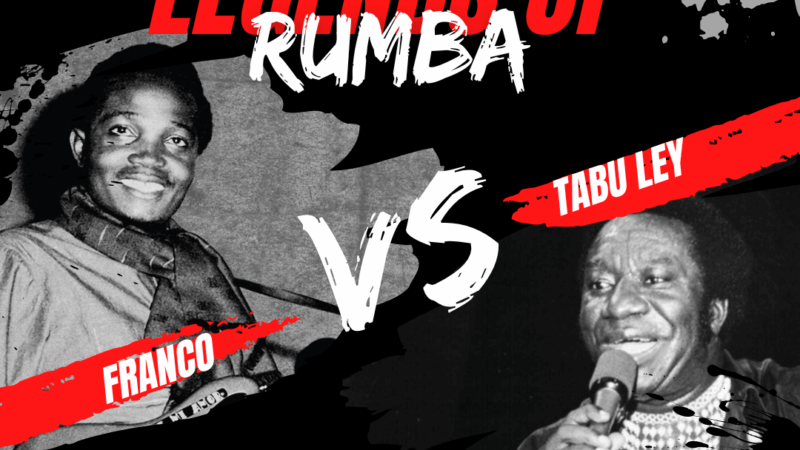
The Sorcerer and the Showman: Thirty Years of Rumba War in the Congo

Every music has its moment of transformation. For Congolese Rumba, that moment lasted thirty years.
This is the story of an evolution fueled not by harmony, but by the friction between two monumental figures: Franco Luambo Makiadi and Tabu Ley Rochereau. From 1960 to 1989, they defined the sound of Kinshasa. Franco, the “Sorcerer,” rooted his music in a deep, hypnotic street groove. Tabu Ley, the “Showman,” answered with accelerated tempos and international flair.
This is how progress works: through creative tension. Explore the explosive decades where their rivalry became an unintentional collaboration. They revolutionized the Sebene, ignited the spark of Soukous, and together expanded the boundaries of African music.

Read More
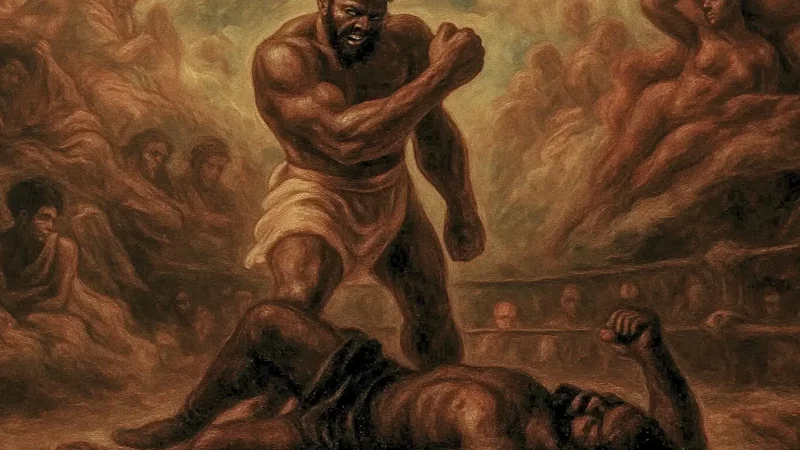
A painting of two titans at the end of battle — one lying defeated on the ground, the other standing triumphant above him.
Essays

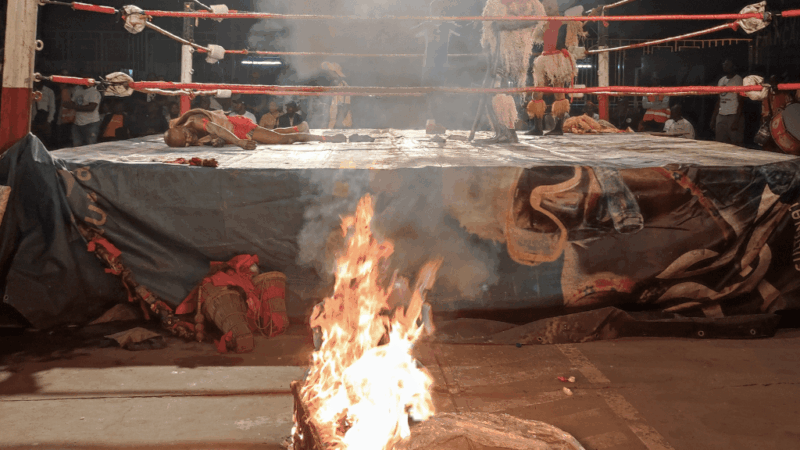
Neither Jungle Nor Rumble: Clash of Two Titans on Sacred Ancestral Ground

History remembers the moment the titans clashed, but it forgets how two warriors were transformed into those titans. That story was written during the five-week delay that stranded them in Kinshasa. The city itself was a crucible, forging each man into his mythic role. One became a titan by dissolving into the world around him, drawing strength from its soil and people. The other was hammered into an opposing titan by his solitude, his power hardening in the silence, fueled by alienation and a longing for home.

And that is how myths are forged. In the unseen struggles. Long before the first bell.

No Comments Read More
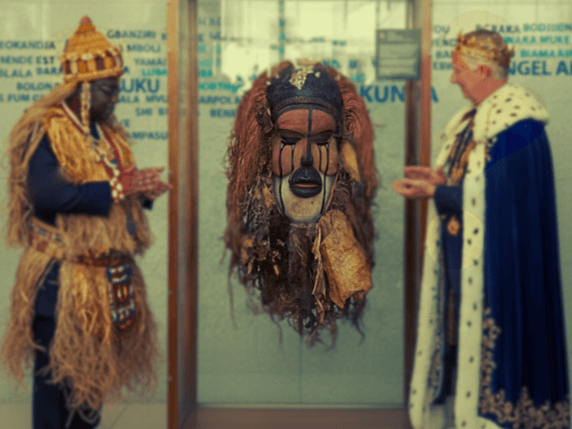
an AI modified image showing the King Philippe of Belgium returning a ceremonial wooden mask, known as the Kakungu mask, to President Félix Tshisekedi
Essays

The Theatre of Colonial Restitution

In June 2022, King Philippe of Belgium handed President Tshisekedi a Suku mask in Kinshasa and called it a restitution. Two weeks later, a prosecutor passed Patrice Lumumba’s tooth to his family in a Brussels box, also called a restitution. In Berlin, Germany signed over the Benin Bronzes by contract, also called a restitution. None of them were. This essay offers a six-point test, drawn from what European law does when the victim is European, so any reader can check whether a ceremony deserves the word or whether the case is being closed on a gift.

No Comments Read More
Essays

The Other Cross: A Journey into Kongo Cosmology

The cross was everywhere in the Kingdom of Kongo, and for the European missionaries who found it, the meaning was obvious. It was a sign from their God, a relic of a shared past.
They saw everything but the truth.
For the Bakongo people, this symbol was no mere icon. It was a key; a map that unlocked the path of the soul, the journey of the sun, and the very structure of the universe. This is the story of a truth hidden in plain sight, and the world that comes into view when we learn to see it through the eyes of “the insiders.”

2 Comments Read More
The academy is dead
Essays

The Academy and the Street: Notes on Art Education in Kinshasa

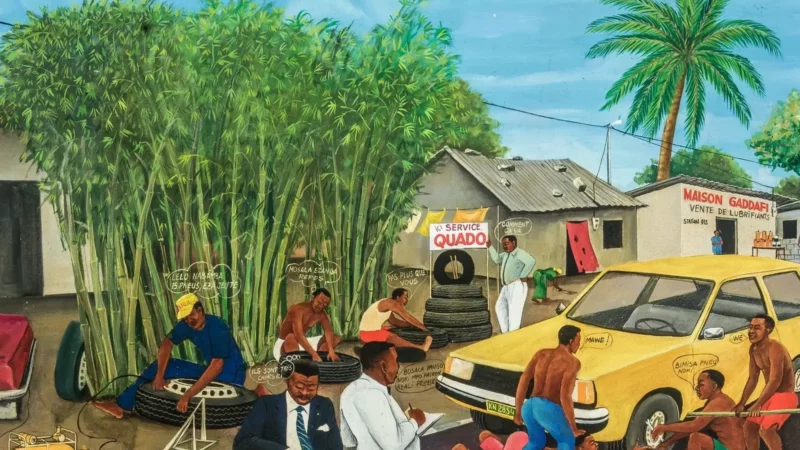
In Kinshasa, some of the best painters never went to art school. They learned on billboards and shop signs, in workshops where a master teaches by hand. Their work now hangs in the Pompidou. Meanwhile the Académie des Beaux-Arts, founded under Belgian rule in 1943, trains graduates the art world rarely notices. We call the workshops the street, as if they were the informal cousin of a real education. But which one is really the newcomer?

1 Comment Read More
A book cover with the title: Beaute congo 1926-2015 Congo Kitoko. FondationCartier pour l'art contemporain
Essays

The Hangover of a Triumph: Inside the Kinshasa Art Scene, 10 Years After “Beauté Congo”

An exhibition celebrating Congolese art where Congolese people owned basically none of it. A market boom that left local artists poorer than before. Master painters who no longer touch a brush. Galleries where most of the paintings are Pinterest copies. Welcome to Kinshasa’s art world a decade after “Beauté Congo”—where success became the architect of failure, where being discovered by the West meant losing yourself, and where the cure turned out to be worse than the disease. This is what cultural extraction looks like in the 21st century: not with colonial officers and forced labor, but with champagne openings, international acclaim, and prices so inflated that an entire community can no longer afford its own culture.

No Comments Read More