Article 15, Débrouillez-vous by Chéri Chérin
Essays

Article 15: The Unwritten Constitution of the Congo

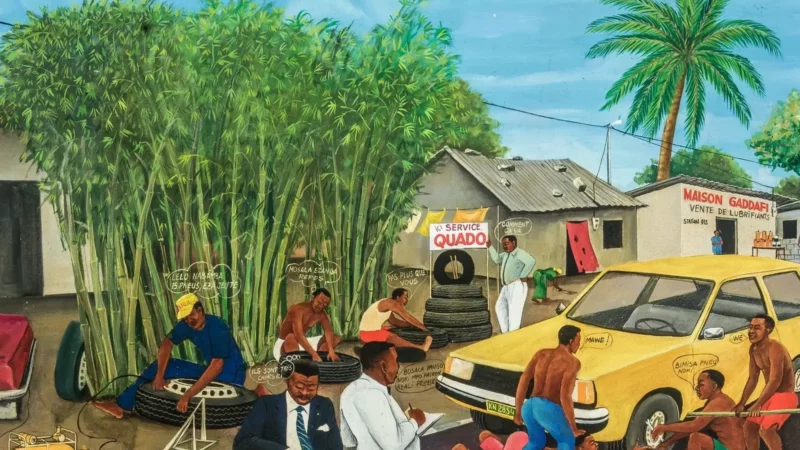
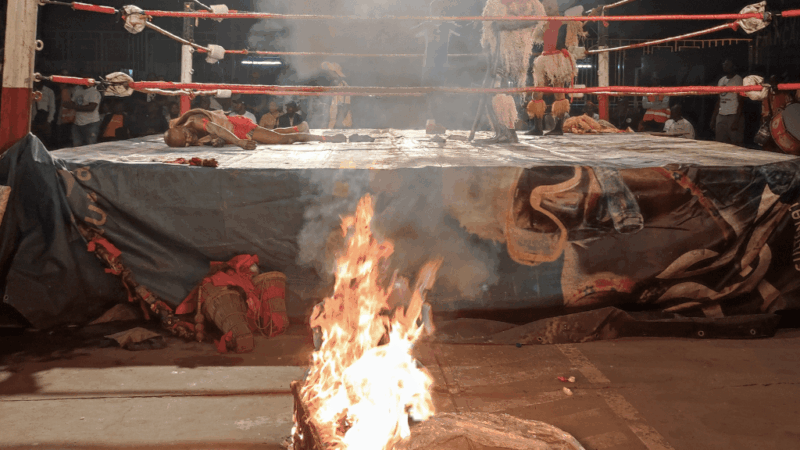
When the state provides nothing, you seize what you can and invent the rest. To exist in Kinshasa is to live by Article 15: Débrouillez-vous. Explore the unwritten constitution of the Congo, where the daily hustle dictates everything from a policeman’s traffic ticket to the art sold in local ateliers. Step off the main boulevards to discover how this relentless pressure acts as the invisible gears keeping millions alive while the elites watch from the hills.
No Comments Read More
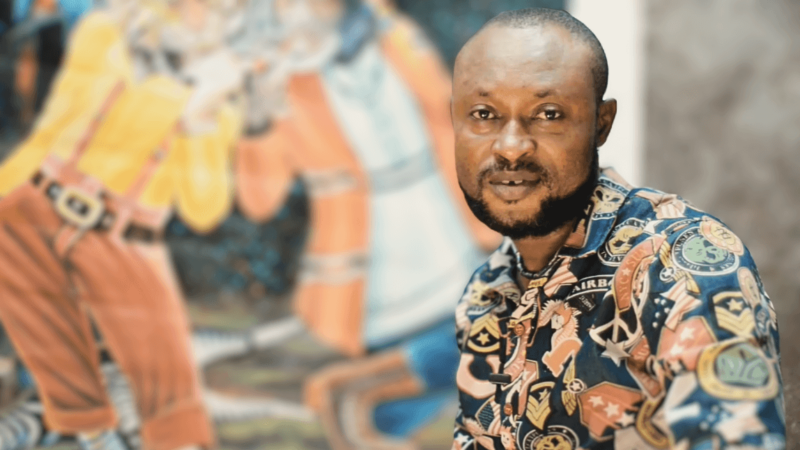
Congolese artist Claude Bosana sits in front of a colorful painting of anthropomorphic animals, wearing a patterned shirt and looking at the camera.
Meet the Artwork

“Intérêt Commun” by Claude Bosana

Claude Bosana, Œil d’Aigle to Kinshasa’s art world, paints a tiger and a bonobo who cannot live together sharing the one interest they have in common: a cigarette. His advice is aimed at the people who hold a portion of authority. On the ground where they stand, the fruit set aside will keep. The zebra will not.

Read More
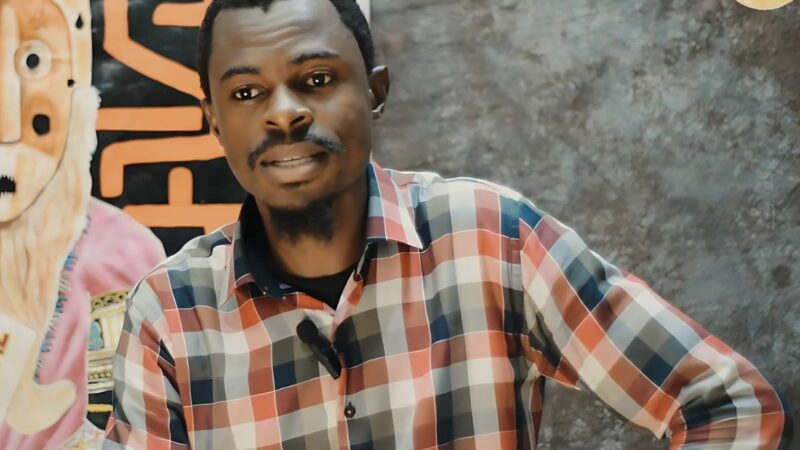
Congolese artist and painter Billy Gibula wearing a plaid shirt, speaking with a focused expression. Behind him, a painting featuring a stylized mask and bold orange text is partially visible.
Meet the Artwork

“Non au Tribalisme” by Billy Gibula

Billy Gibula, painter and one of Kitokongo’s founders, answers tribalism with a figure who wears the argument: a wooden mask above a boldly printed shirt, a banner reading NON AU TRIBALISME across the chest, and, just below the banner, a machete at rest in a hand painted every color at once. In the video he says why: we are all human, all one family, and love must reign.

No Comments Read More
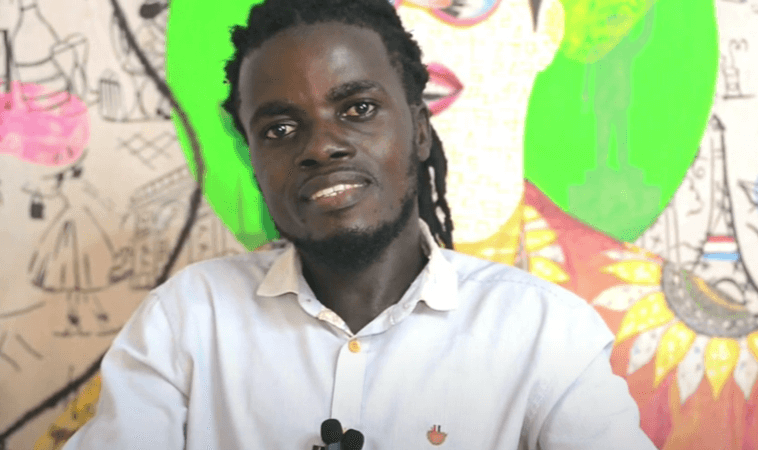
Congolese artist Winnart Nsangu wearing a white shirt, sitting in front of a colorful artwork featuring a stylized face with vibrant green and yellow elements. He has a warm smile and a relaxed posture, with a microphone clipped to his shirt.
Meet the Artwork

“Kin Eza Mboka Na Nga” by Winnart Nsangu

Winnart Nsangu’s Kin Eza Mboka Na Nga (Kinshasa Is My City): a man painted in full color against a Paris that stays a sketch. Nsangu usually leaves his faces without eyes. Here the eyes push through rose-tinted glasses, and they are looking at home.

Read More
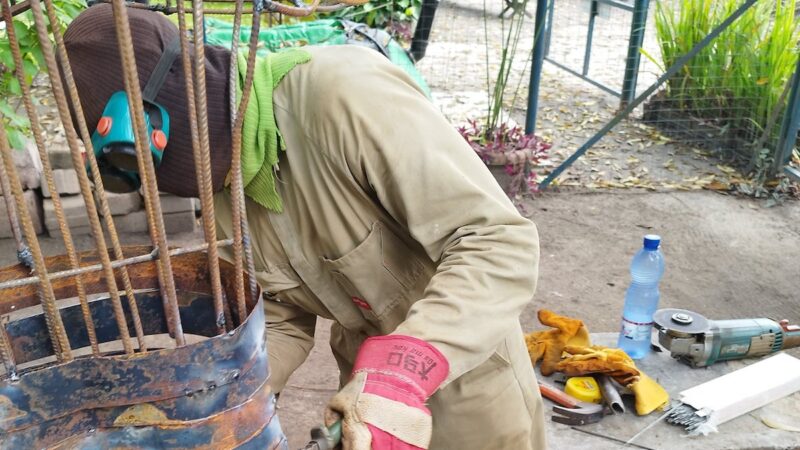
Simplus Ntoto in goggles, respirator and red work gloves shaping a sculpture's rebar frame outdoors, with an angle grinder and tools on the bench beside him
Interviews

From Car Shells to Art Galleries: An Interview with Sculptor Simplus Ntoto

Embark on a remarkable journey into the world of Simplus Ntoto, a revolutionary artist from Kinshasa who has pioneered a unique approach to sculpture using car shells. In our exclusive interview, Ntoto opens up about his creative process, the origins of his distinctive style, and his relentless pursuit of perfection. Uncover the deep connection he shares with his subjects and the powerful message embedded in his art. This is a compelling narrative of passion, innovation, and resilience that illustrates how Ntoto is not only shaping metal but also the future of sculpture.

No Comments Read More
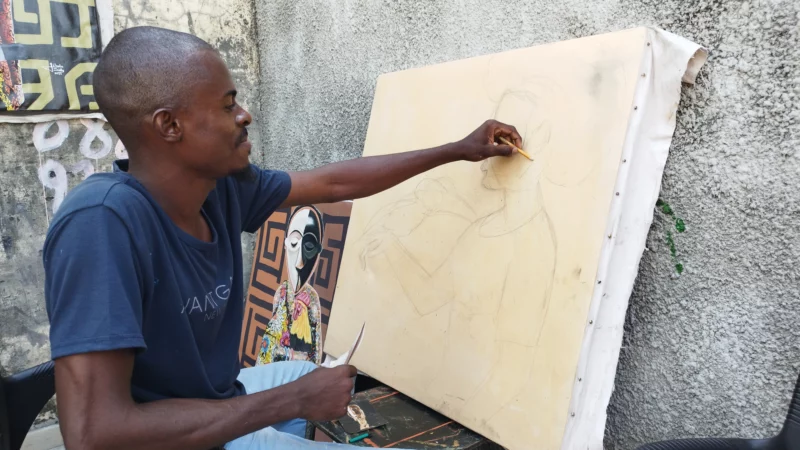
Billy Gibula seated outdoors sketching a portrait in pencil on a large canvas, one of his colorful mask paintings visible against the wall behind him
Interviews

In the Studio with Billy Gibula

On World Art Day we visited the painter Billy Gibula in his studio in Masina, Kinshasa. He told us how a street drawing led him to his mentor, why he left that studio to find his own style, what the masks and birds in his paintings mean, and what young painters in Kinshasa are up against.

No Comments Read More
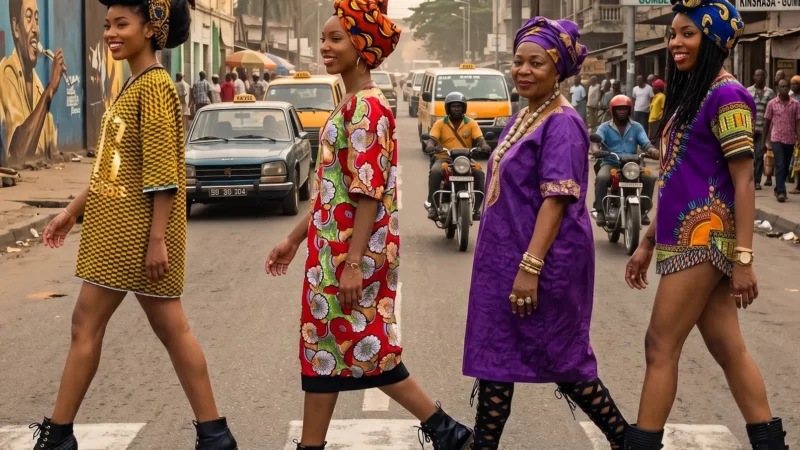
4 women wearing pagne in the streets of kinshasa
Essays

Pagne: More Than Fashion

In Congo, pagne feels at home. It belongs to mothers and aunties, to weddings and mourning, to church and family. Few think of Indonesia, Dutch factories, or European trade routes. Yet wax-resist came from Java, printing from Dutch and English mills, and many patterns from Indonesia. This print was not born in Africa. The African story begins after printing: in the market, the naming, the tailoring, the ceremony, the body. The cloth came off a machine. The garment did not. It was talked into being.

No Comments Read More