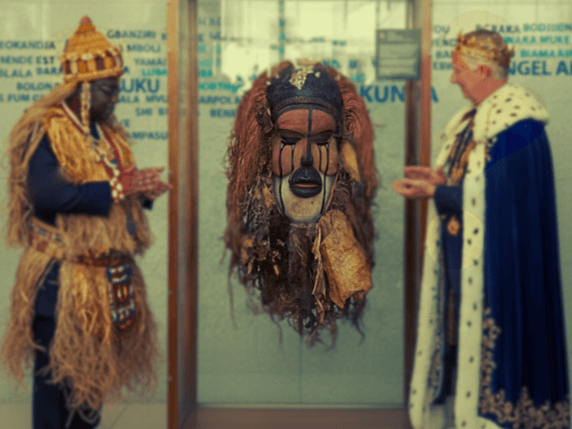
an AI modified image showing the King Philippe of Belgium returning a ceremonial wooden mask, known as the Kakungu mask, to President Félix Tshisekedi
Essays

The Theatre of Colonial Restitution

In June 2022, King Philippe of Belgium handed President Tshisekedi a Suku mask in Kinshasa and called it a restitution. Two weeks later, a prosecutor passed Patrice Lumumba’s tooth to his family in a Brussels box, also called a restitution. In Berlin, Germany signed over the Benin Bronzes by contract, also called a restitution. None of them were. This essay offers a six-point test, drawn from what European law does when the victim is European, so any reader can check whether a ceremony deserves the word or whether the case is being closed on a gift.
No Comments Read More
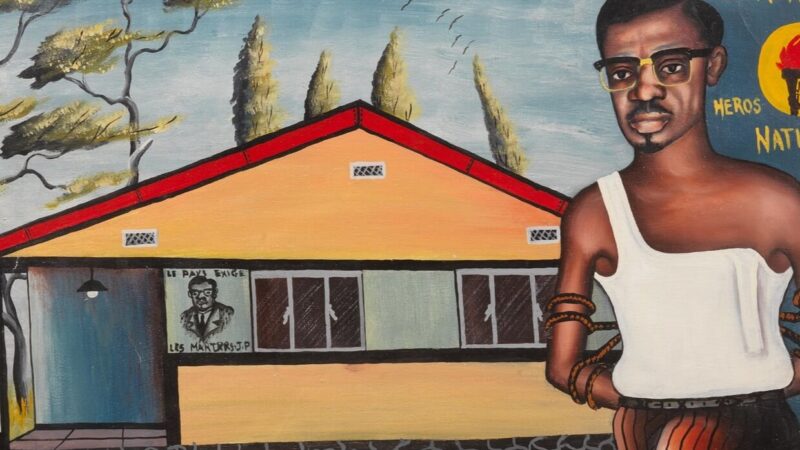
A painting by Tshibumba Kanda Matulu depicting Patrice Lumumba, bound and wearing a torn white tank top, standing in front of a house. The artwork includes text honoring Lumumba as a national hero and references his unmarked grave in Lubumbashi.
Essays

A Visual Tour of Congo History (Part 2): Patrice Lumumba – The Making of an African Legend

Through TKM’s extraordinary paintings, we pay homage to Patrice Lumumba, 64 years after his assassination. Here was a man whose words proved so dangerous that his enemies not only killed him, but tried to erase every trace of his existence – dissolving his body in acid and mysteriously “losing” nearly all recordings of his powerful speeches. Malcolm X called him “the greatest black man who ever walked the African continent,” yet his story remains surprisingly undertold. Following TKM’s visual testament, we uncover the journey of an African hero who dared to speak truth to power, who fought with words rather than weapons, and whose vision of true independence was so threatening that even six decades later, we’re still discovering how thoroughly his voice was suppressed. This is not just a retelling of history, but a tribute to a man whose dream of African dignity and real freedom remains as vital today as it was in 1961.

No Comments Read More
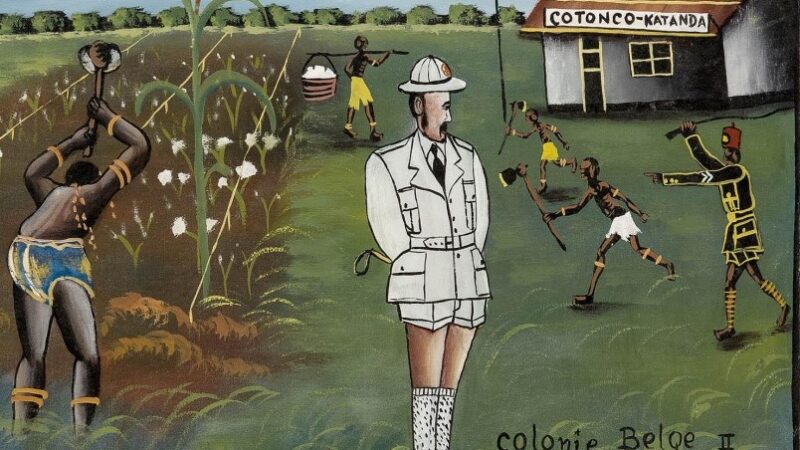
A painting by tshibumba kanda-matulu (TKM) about belgian rule in Congo called: Culture obligatoire
Essays

A Visual Tour of Congo History (Part 1): From Stanley to Belgian Rule

Through five striking paintings by Congolese artist Tshibumba Kanda Matulu, discover how colonial power was established in Congo, from Stanley’s first arrival to Belgian rule. His artwork reveals the calculated stages of colonial control: exploration, betrayal, deception, and systematic elimination of indigenous power. This visual journey through history, seen through Congolese eyes, reveals how one of history’s most brutal colonial enterprises was built – and the extraordinary resilience of those who endured it. More than historical documentation, these paintings offer a uniquely Congolese perspective on events usually told by Western voices.

No Comments Read More
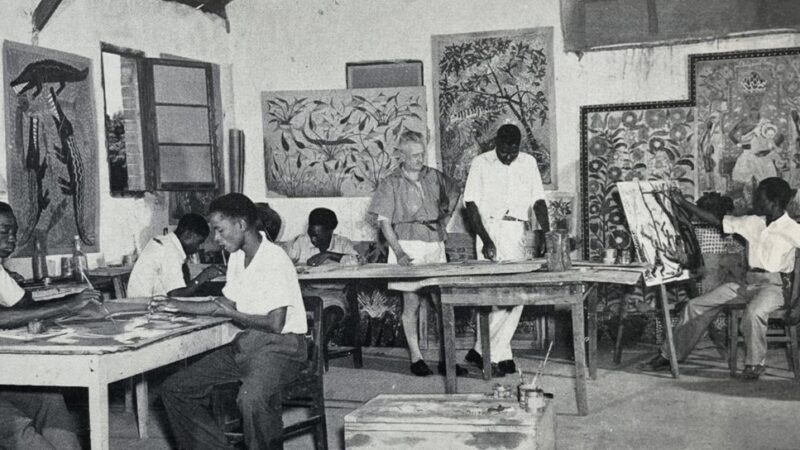
Pierre Romain-Desfossés and famous congolese painters at Le Hangar art workshop in Lubumbashi DRC
Essays

The Illusion of Art: Le Hangar and the Colonial Propaganda

Have you encountered yet another glowing tribute to “Le Hangar,” the supposed birthplace of modern Congolese art? Open any book about Congolese art history and three colonial names inevitably dominate the narrative: Georges Thiry, Pierre Romain Desfosses, and Laurent Moonens – as if Congolese art began with their “discovery.” This persistent colonial lens transforms art histories into tributes to European “mentors,” erasing centuries of pre-existing artistic traditions. Behind Le Hangar’s carefully curated image lies a darker truth: it served both as Belgium’s desperate attempt to rebrand its brutal colonial image into that of a “cultural protector,” and as a sophisticated system for controlling and profiting from Congolese art.
This essay examines both local and global contexts to expose how Le Hangar served not as an artistic sanctuary, but as a tool of colonial propaganda and economic exploitation—a reality that still shapes how Congolese art history is told today.

No Comments Read More
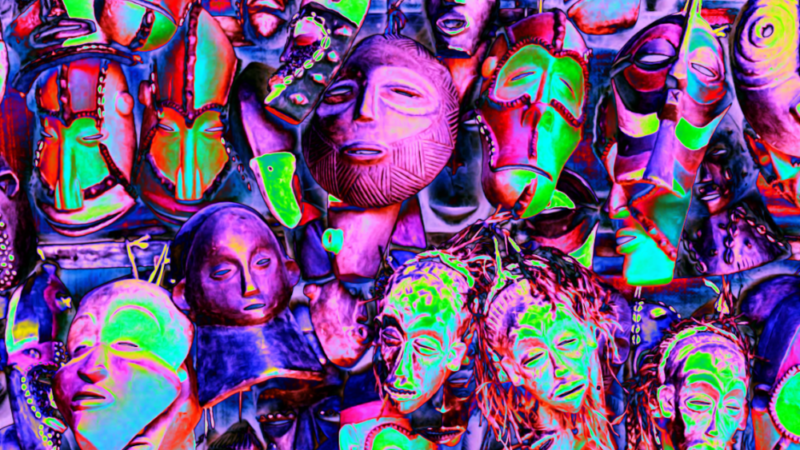
Lots of Congolese masks lying on top of each other
Essays

Behind Glass: Congolese Masks and the Question of Belonging

Behind the glass of European museums, Congolese masterpieces sit frozen under generic tribal labels. But a mask was never just an object; it was a living event, a social relationship, and the work of a brilliant individual creator. While Western art history spends centuries naming its own anonymous masters, the search for Congolese sculptors was quietly abandoned. Reclaiming Congolese authorship means rejecting the grammar of property and restoring names, lineages, and agency to these works. The masters did not run out; the searching did. It is time to shatter the vitrine and rewrite the story.
Let me tell you this: those masks are everything but primitive, and their living power was never meant to be silenced behind museum glass.

They were the living voice of ancestral wisdom. They danced. They judged. They healed. They were alive. This is the story of their stolen power and their fight to finally come home.

No Comments Read More