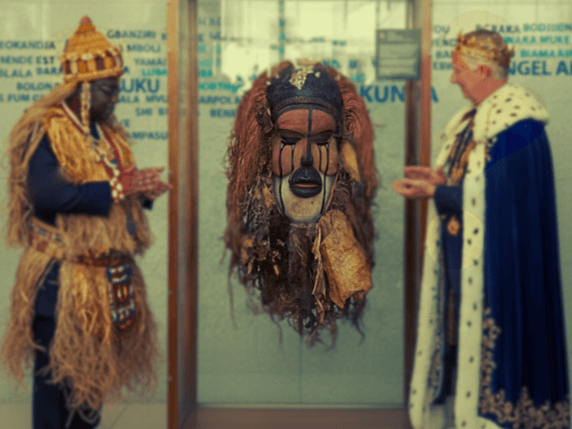
an AI modified image showing the King Philippe of Belgium returning a ceremonial wooden mask, known as the Kakungu mask, to President Félix Tshisekedi
Essays

The Theatre of Colonial Restitution

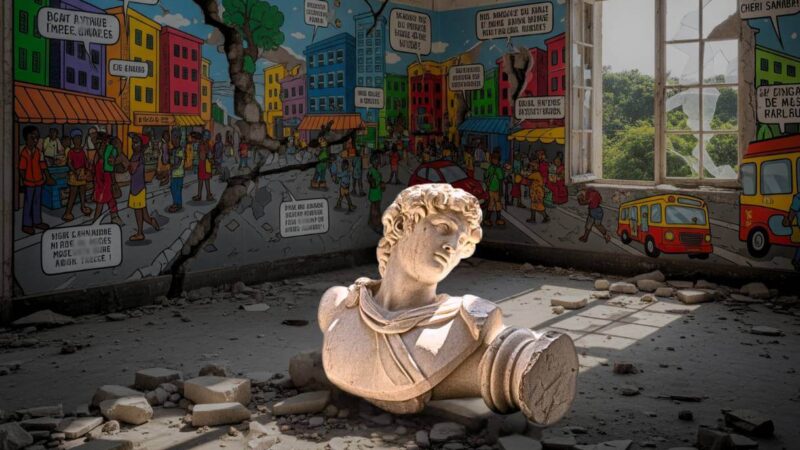
In June 2022, King Philippe of Belgium handed President Tshisekedi a Suku mask in Kinshasa and called it a restitution. Two weeks later, a prosecutor passed Patrice Lumumba’s tooth to his family in a Brussels box, also called a restitution. In Berlin, Germany signed over the Benin Bronzes by contract, also called a restitution. None of them were. This essay offers a six-point test, drawn from what European law does when the victim is European, so any reader can check whether a ceremony deserves the word or whether the case is being closed on a gift.
No Comments Read More
The academy is dead
Essays

The Academy and the Street: Notes on Art Education in Kinshasa

In Kinshasa, some of the best painters never went to art school. They learned on billboards and shop signs, in workshops where a master teaches by hand. Their work now hangs in the Pompidou. Meanwhile the Académie des Beaux-Arts, founded under Belgian rule in 1943, trains graduates the art world rarely notices. We call the workshops the street, as if they were the informal cousin of a real education. But which one is really the newcomer?

1 Comment Read More
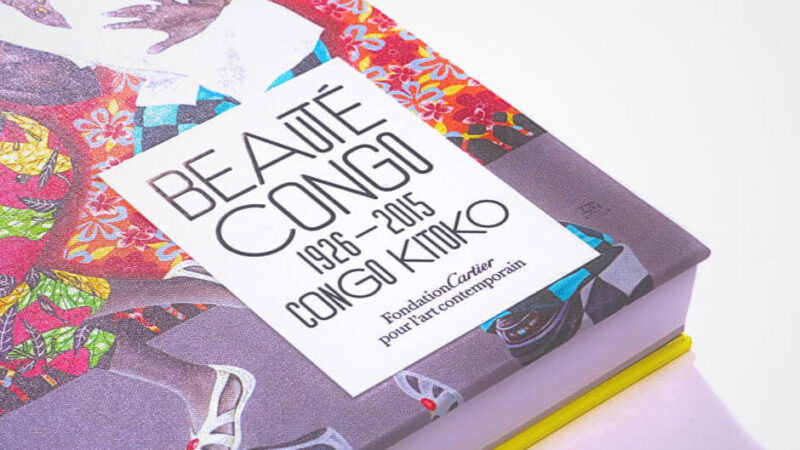
A book cover with the title: Beaute congo 1926-2015 Congo Kitoko. FondationCartier pour l'art contemporain
Essays

The Hangover of a Triumph: Inside the Kinshasa Art Scene, 10 Years After “Beauté Congo”

An exhibition celebrating Congolese art where Congolese people owned basically none of it. A market boom that left local artists poorer than before. Master painters who no longer touch a brush. Galleries where most of the paintings are Pinterest copies. Welcome to Kinshasa’s art world a decade after “Beauté Congo”—where success became the architect of failure, where being discovered by the West meant losing yourself, and where the cure turned out to be worse than the disease. This is what cultural extraction looks like in the 21st century: not with colonial officers and forced labor, but with champagne openings, international acclaim, and prices so inflated that an entire community can no longer afford its own culture.

No Comments Read More
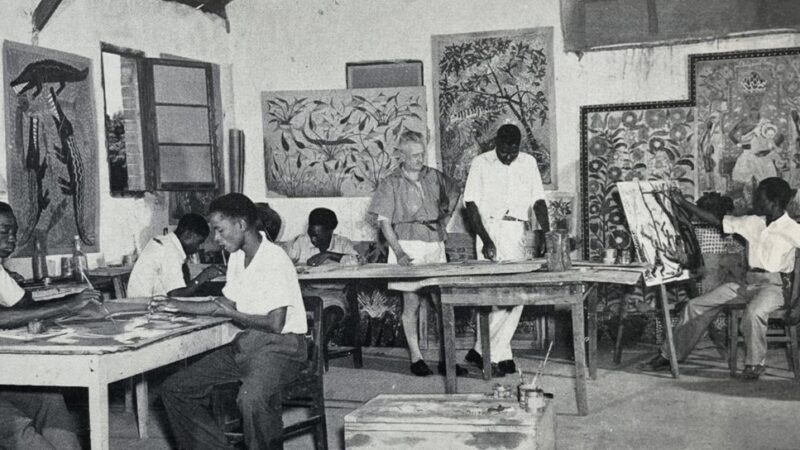
Pierre Romain-Desfossés and famous congolese painters at Le Hangar art workshop in Lubumbashi DRC
Essays

The Illusion of Art: Le Hangar and the Colonial Propaganda

Have you encountered yet another glowing tribute to “Le Hangar,” the supposed birthplace of modern Congolese art? Open any book about Congolese art history and three colonial names inevitably dominate the narrative: Georges Thiry, Pierre Romain Desfosses, and Laurent Moonens – as if Congolese art began with their “discovery.” This persistent colonial lens transforms art histories into tributes to European “mentors,” erasing centuries of pre-existing artistic traditions. Behind Le Hangar’s carefully curated image lies a darker truth: it served both as Belgium’s desperate attempt to rebrand its brutal colonial image into that of a “cultural protector,” and as a sophisticated system for controlling and profiting from Congolese art.
This essay examines both local and global contexts to expose how Le Hangar served not as an artistic sanctuary, but as a tool of colonial propaganda and economic exploitation—a reality that still shapes how Congolese art history is told today.

No Comments Read More
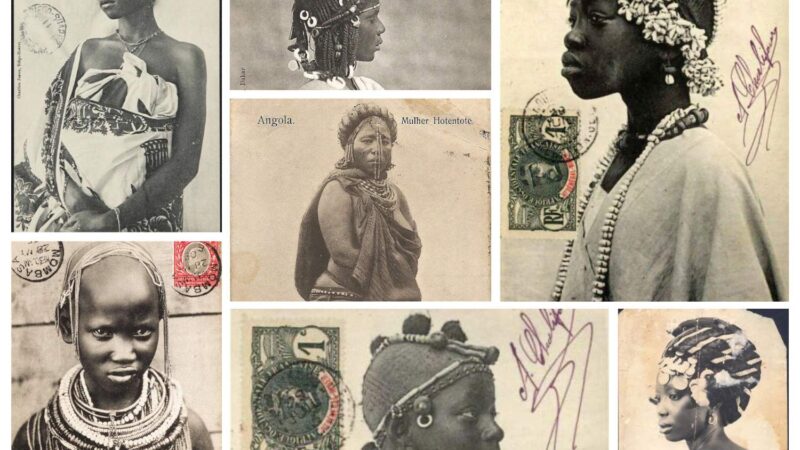
Different photos of african women as postcard during colonial times
Essays

The Woman on Every Wall: Exoticism and plagiarism in the Congolese art market

Spend an afternoon in the galleries of Kinshasa and you begin to recognize the same woman. She is on one wall, then the next, then the gallery down the street, the ornament changed each time, the face never. She has no name on the wall, and no one expects her to. She is a type, and the type sells. Many of these faces were traced from photographs of women who never agreed to sit, then sold as original work. No one has asked the woman behind the painting who she is.

Pinned
No Comments Read More
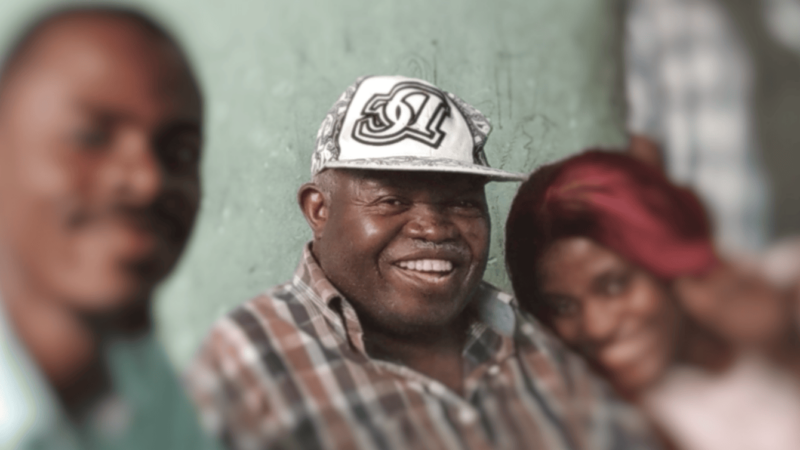
Cheri Cherin at his atelier in masina kinshasa
Interviews

Chéri Chérin – The Interview: A Journey Through Art, Activism, and “Peinture Populaire”

Join us in exploring the profound world of Grand Maître Chéri Chérin, a pivotal figure whose legacy transcends his art to shape Congolese culture. Through an insightful interview, we explore the life of Chérin, the visionary mentor behind “Peinture Populaire.” His influence, from Kinshasa’s studios to the international scene, highlights his role in nurturing talents and pioneering a movement. Discover Chérin’s journey, challenges, and triumphs, revealing how his commitment to mentorship and art is crafting a future for new generations. Dive into the essence of Chéri Chérin’s enduring impact

Read More
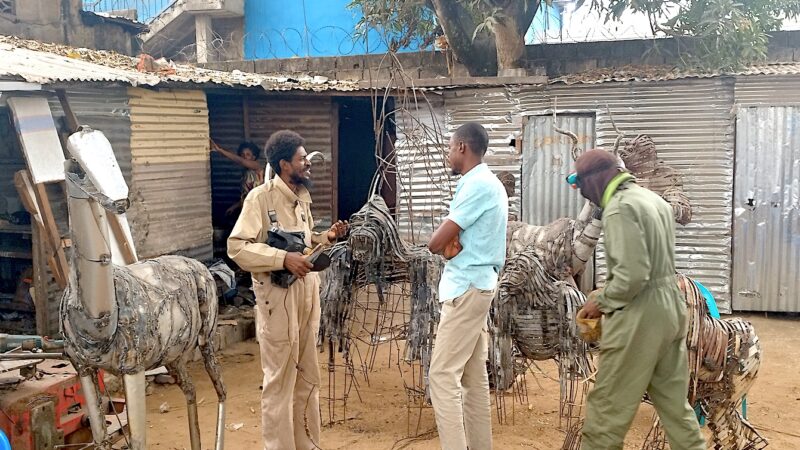
in an interview with sculpture libende today
Interviews

Sculpting Dreams: A Conversation with the Visionaries of “Sculpture Libende Today”

In an exclusif conversation within the vibrant heart of Kinshasa’s art scene, we dive deep with the innovative minds behind “Libende Today”. Amidst the backdrop of towering metal sculptures and the atmosphere thick with creativity, the founders passionately unveil the essence of their collective. They speak of dreams that lay the groundwork of reality, the power of independence while embracing collaboration, and the paramount importance of the artist, not just the art. The narrative isn’t just about magnificent sculptures—it’s about carving a space for artists in today’s world, giving life to their dreams, and the mutual exchange of thought and vision across continents. This isn’t just an interview; it’s an exploration of the soul behind “Libende Today”, a celebration of their unique spirit and philosophy.

Read More