The academy is dead
Essays

The Academy and the Street: Notes on Art Education in Kinshasa

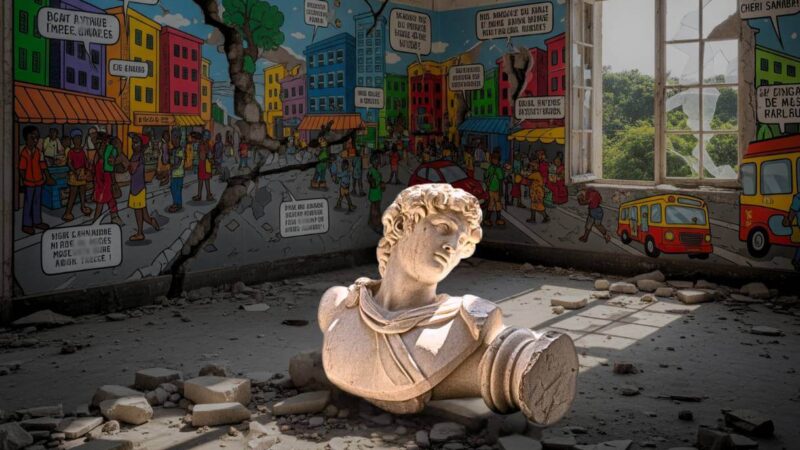
In Kinshasa, some of the best painters never went to art school. They learned on billboards and shop signs, in workshops where a master teaches by hand. Their work now hangs in the Pompidou. Meanwhile the Académie des Beaux-Arts, founded under Belgian rule in 1943, trains graduates the art world rarely notices. We call the workshops the street, as if they were the informal cousin of a real education. But which one is really the newcomer?
1 Comment Read More
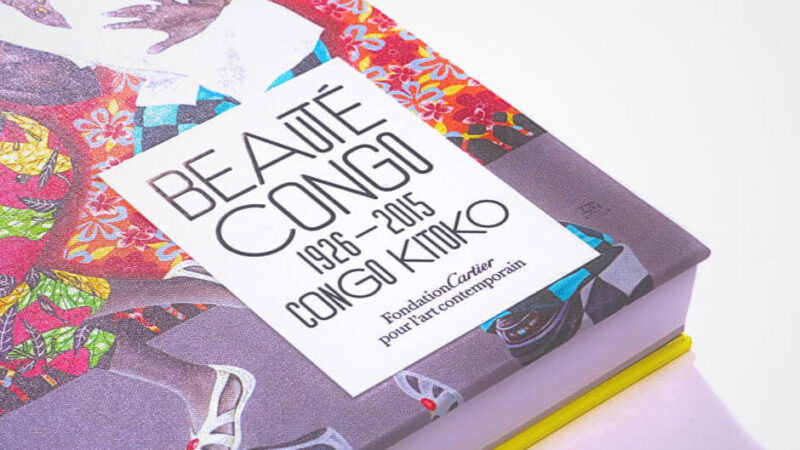
A book cover with the title: Beaute congo 1926-2015 Congo Kitoko. FondationCartier pour l'art contemporain
Essays

The Hangover of a Triumph: Inside the Kinshasa Art Scene, 10 Years After “Beauté Congo”

An exhibition celebrating Congolese art where Congolese people owned basically none of it. A market boom that left local artists poorer than before. Master painters who no longer touch a brush. Galleries where most of the paintings are Pinterest copies. Welcome to Kinshasa’s art world a decade after “Beauté Congo”—where success became the architect of failure, where being discovered by the West meant losing yourself, and where the cure turned out to be worse than the disease. This is what cultural extraction looks like in the 21st century: not with colonial officers and forced labor, but with champagne openings, international acclaim, and prices so inflated that an entire community can no longer afford its own culture.

No Comments Read More
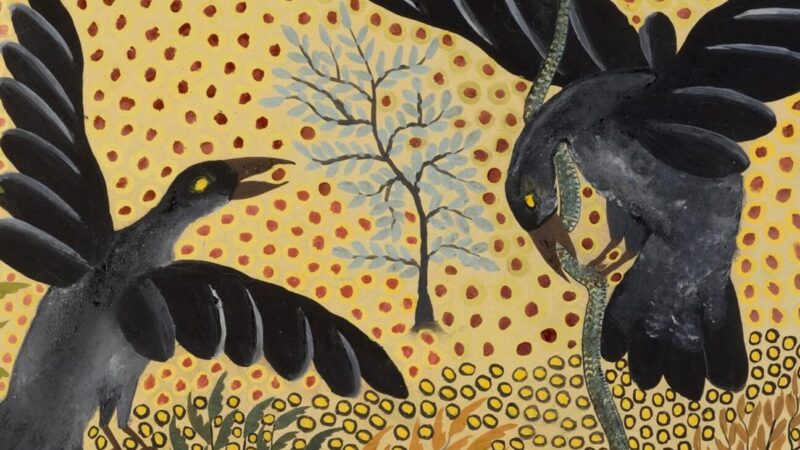
Painting by Pilipili Mulongoy of two black birds, one clutching a snake in its beak, amid a pale tree and foliage on a yellow ground stippled with red dots.
Interviews

Pilipili Mulongoy: A Master’s Story in His Own Words

In a rare 1979 interview, Pilipili Mulongoy—once a humble plumber—reveals how sketching a simple wooden figure ignited his rise to prominence in modern African art. Raised by a master drummer, he first learned the communal power of creativity before honing his signature “petit point” style under mentor Pierre Romain-Desfossés. Now, his reflections illuminate the unbroken thread between traditional craftsmanship and modern expression. Discover how one man’s relentless curiosity bridged worlds and inspired a new generation of Congolese artists.

2 Comments Read More
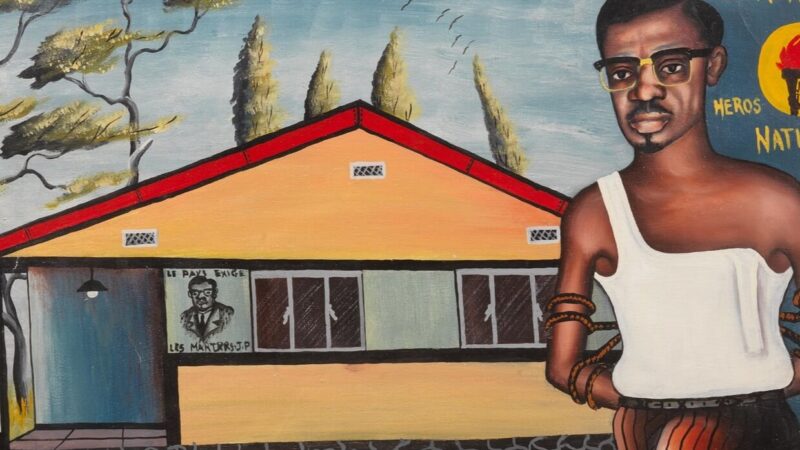
A painting by Tshibumba Kanda Matulu depicting Patrice Lumumba, bound and wearing a torn white tank top, standing in front of a house. The artwork includes text honoring Lumumba as a national hero and references his unmarked grave in Lubumbashi.
Essays

A Visual Tour of Congo History (Part 2): Patrice Lumumba – The Making of an African Legend

Through TKM’s extraordinary paintings, we pay homage to Patrice Lumumba, 64 years after his assassination. Here was a man whose words proved so dangerous that his enemies not only killed him, but tried to erase every trace of his existence – dissolving his body in acid and mysteriously “losing” nearly all recordings of his powerful speeches. Malcolm X called him “the greatest black man who ever walked the African continent,” yet his story remains surprisingly undertold. Following TKM’s visual testament, we uncover the journey of an African hero who dared to speak truth to power, who fought with words rather than weapons, and whose vision of true independence was so threatening that even six decades later, we’re still discovering how thoroughly his voice was suppressed. This is not just a retelling of history, but a tribute to a man whose dream of African dignity and real freedom remains as vital today as it was in 1961.

No Comments Read More
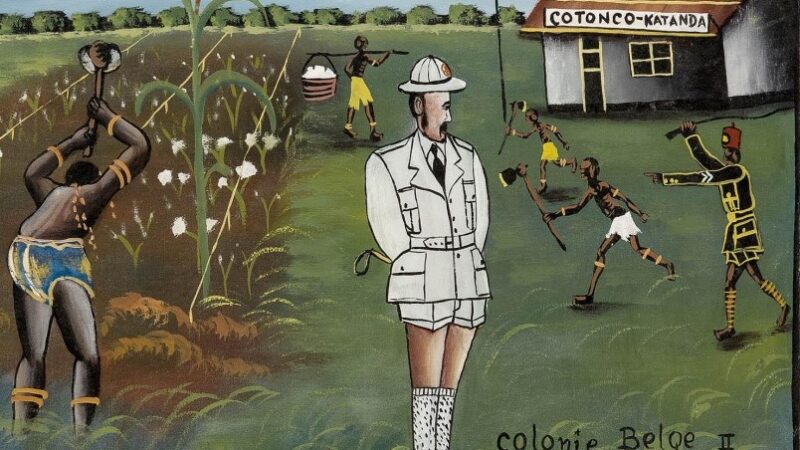
A painting by tshibumba kanda-matulu (TKM) about belgian rule in Congo called: Culture obligatoire
Essays

A Visual Tour of Congo History (Part 1): From Stanley to Belgian Rule

Through five striking paintings by Congolese artist Tshibumba Kanda Matulu, discover how colonial power was established in Congo, from Stanley’s first arrival to Belgian rule. His artwork reveals the calculated stages of colonial control: exploration, betrayal, deception, and systematic elimination of indigenous power. This visual journey through history, seen through Congolese eyes, reveals how one of history’s most brutal colonial enterprises was built – and the extraordinary resilience of those who endured it. More than historical documentation, these paintings offer a uniquely Congolese perspective on events usually told by Western voices.

No Comments Read More
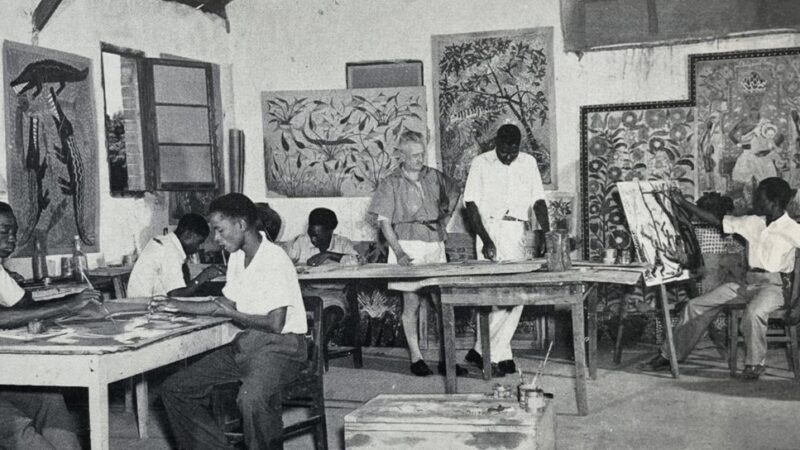
Pierre Romain-Desfossés and famous congolese painters at Le Hangar art workshop in Lubumbashi DRC
Essays

The Illusion of Art: Le Hangar and the Colonial Propaganda

Have you encountered yet another glowing tribute to “Le Hangar,” the supposed birthplace of modern Congolese art? Open any book about Congolese art history and three colonial names inevitably dominate the narrative: Georges Thiry, Pierre Romain Desfosses, and Laurent Moonens – as if Congolese art began with their “discovery.” This persistent colonial lens transforms art histories into tributes to European “mentors,” erasing centuries of pre-existing artistic traditions. Behind Le Hangar’s carefully curated image lies a darker truth: it served both as Belgium’s desperate attempt to rebrand its brutal colonial image into that of a “cultural protector,” and as a sophisticated system for controlling and profiting from Congolese art.
This essay examines both local and global contexts to expose how Le Hangar served not as an artistic sanctuary, but as a tool of colonial propaganda and economic exploitation—a reality that still shapes how Congolese art history is told today.

No Comments Read More
Cheri Cherin at his atelier in masina kinshasa
Interviews

Chéri Chérin – The Interview: A Journey Through Art, Activism, and “Peinture Populaire”

Join us in exploring the profound world of Grand Maître Chéri Chérin, a pivotal figure whose legacy transcends his art to shape Congolese culture. Through an insightful interview, we explore the life of Chérin, the visionary mentor behind “Peinture Populaire.” His influence, from Kinshasa’s studios to the international scene, highlights his role in nurturing talents and pioneering a movement. Discover Chérin’s journey, challenges, and triumphs, revealing how his commitment to mentorship and art is crafting a future for new generations. Dive into the essence of Chéri Chérin’s enduring impact

Read More
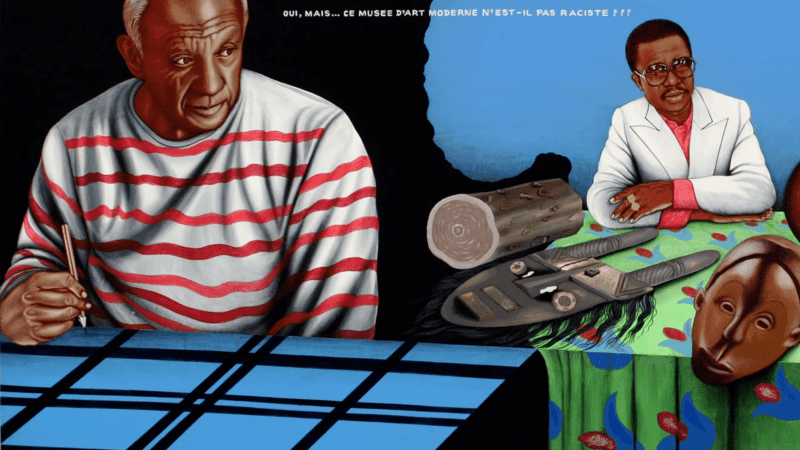
Painting by Chéri Samba showing Picasso drawing at a blue grid table while another artist sits behind African masks, under the title "Quel avenir pour notre art ?"
Essays

11 Congolese Painters Who Redefined African Art

From history painters working with colonial-era restrictions to modern visionaries crafting Afrofuturistic dreamscapes, Congolese artists have long been revolutionaries with a brush. Meet thirteen painters who transformed limitations into liberation: Tshibumba Kanda-Matulu, who dared to paint Congo’s painful history under Mobutu’s watchful eye; Chéri Samba, whose neon-bright satires caught the world’s attention; Pilipili Mulongoy, who turned colonial constraints into masterpieces of motion; and Monsengo Shula, who dresses astronauts in traditional pagne as they drift through cosmic realms.
Yet this is more than just a journey through Congo’s artistic past—it’s a gateway to its future. As we at Kitokongo scour Kinshasa’s vibrant neighborhoods and beyond, we’re discovering the next generation of visionaries, artists who are redefining what Congolese art can be. Join us in exploring not just who these painters were and are, but who they’re becoming. Because in Congo, every artwork is both a survival story and a revolution waiting to happen.

3 Comments Read More