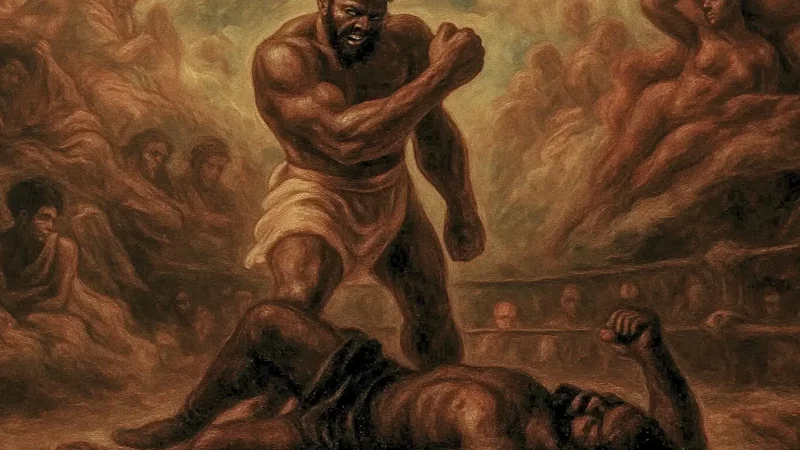
A painting of two titans at the end of battle — one lying defeated on the ground, the other standing triumphant above him.
Essays

Neither Jungle Nor Rumble: Clash of Two Titans on Sacred Ancestral Ground

History remembers the moment the titans clashed, but it forgets how two warriors were transformed into those titans. That story was written during the five-week delay that stranded them in Kinshasa. The city itself was a crucible, forging each man into his mythic role. One became a titan by dissolving into the world around him, drawing strength from its soil and people. The other was hammered into an opposing titan by his solitude, his power hardening in the silence, fueled by alienation and a longing for home.

And that is how myths are forged. In the unseen struggles. Long before the first bell.
No Comments Read More
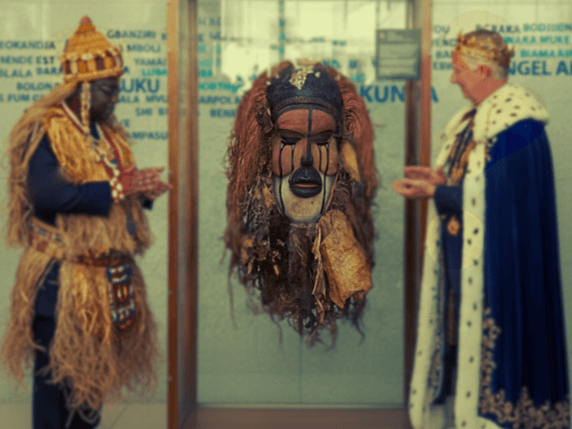
an AI modified image showing the King Philippe of Belgium returning a ceremonial wooden mask, known as the Kakungu mask, to President Félix Tshisekedi
Essays

The Theatre of Colonial Restitution

In June 2022, King Philippe of Belgium handed President Tshisekedi a Suku mask in Kinshasa and called it a restitution. Two weeks later, a prosecutor passed Patrice Lumumba’s tooth to his family in a Brussels box, also called a restitution. In Berlin, Germany signed over the Benin Bronzes by contract, also called a restitution. None of them were. This essay offers a six-point test, drawn from what European law does when the victim is European, so any reader can check whether a ceremony deserves the word or whether the case is being closed on a gift.

No Comments Read More
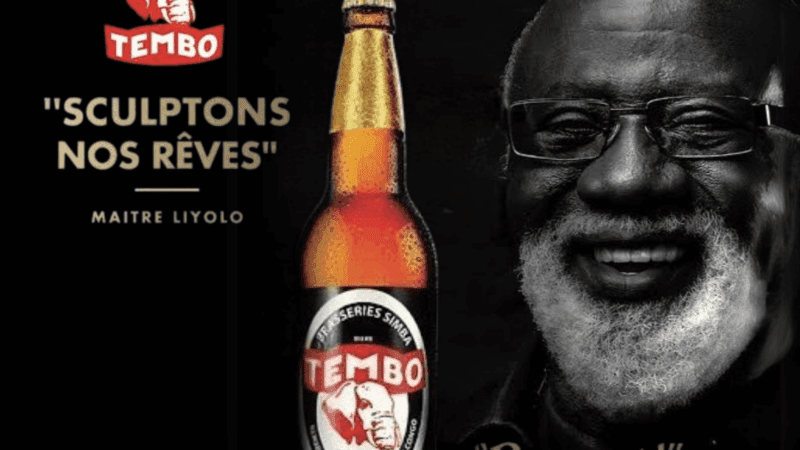
Tembo beer tribute graphic honoring Maître Liyolo, showing a bottle beside a smiling portrait of the sculptor with the slogans 'Sculptons nos rêves' and 'Respect!'.
Essays

From Bolobo to Kōkyo: An Homage to Alfred Liyolo

Walk through Kinshasa today, and you’ll encounter Alfred Liyolo’s legacy in two forms: bronze sculptures gracing public squares and his smiling face on Tembo beer advertisements throughout the city. That a beloved Congolese beer brand chose an artist to represent their product speaks volumes about how Liyolo captured the nation’s heart.
The journey from Bolobo, a humble riverside town on the Congo River where Liyolo was born in 1943, to Kokyo (Tokyo’s Imperial Palace) where he became the first and only African artist ever received by Emperor Akihito, is extraordinary. This is the story of how a grandson of an ivory carver transformed bronze into bridges between worlds, proved that art could speak to emperors and common people alike, and became a symbol of Congolese pride served with every bottle of beer in the nation’s capital.

Read More
The untold story of antoinette lubaki
Essays

The Untold Story of Antoinette Lubaki: Congo’s Avant-Garde Female Artist

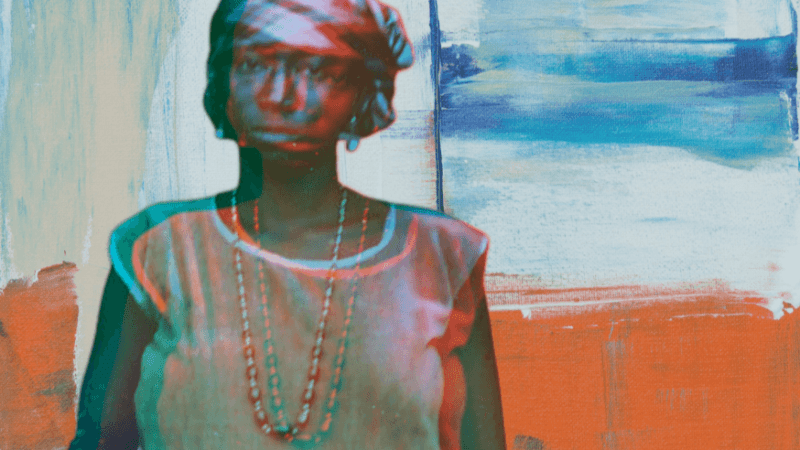
Antoinette Lubaki painted in colonial Katanga in the 1920s alongside her husband Albert. Their watercolors traveled to Brussels, Geneva, and Paris, and were filed under his name. What the colonial archive missed was a partnership in which the visual language came from her side, carried from the mural tradition she grew up in into a marriage that worked as one. This article traces what their work actually was, how it was absorbed into a single masculine signature, and what an honest recovery looks like when the goal is not to flip the erasure but to retire it.

1 Comment Read More
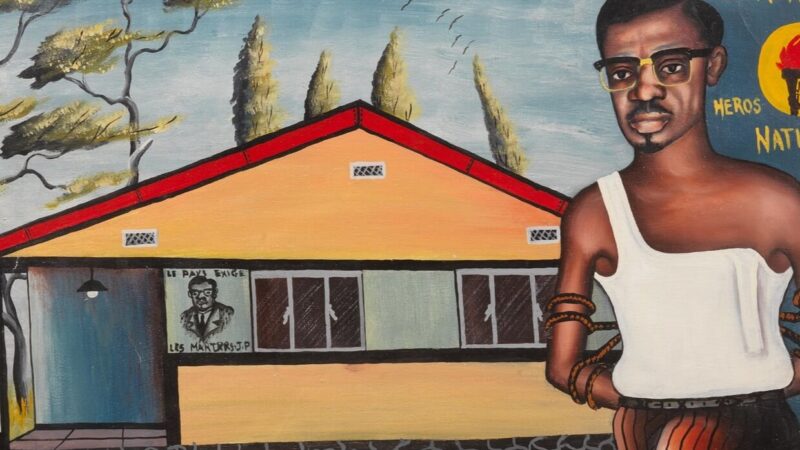
A painting by Tshibumba Kanda Matulu depicting Patrice Lumumba, bound and wearing a torn white tank top, standing in front of a house. The artwork includes text honoring Lumumba as a national hero and references his unmarked grave in Lubumbashi.
Essays

A Visual Tour of Congo History (Part 2): Patrice Lumumba – The Making of an African Legend

Through TKM’s extraordinary paintings, we pay homage to Patrice Lumumba, 64 years after his assassination. Here was a man whose words proved so dangerous that his enemies not only killed him, but tried to erase every trace of his existence – dissolving his body in acid and mysteriously “losing” nearly all recordings of his powerful speeches. Malcolm X called him “the greatest black man who ever walked the African continent,” yet his story remains surprisingly undertold. Following TKM’s visual testament, we uncover the journey of an African hero who dared to speak truth to power, who fought with words rather than weapons, and whose vision of true independence was so threatening that even six decades later, we’re still discovering how thoroughly his voice was suppressed. This is not just a retelling of history, but a tribute to a man whose dream of African dignity and real freedom remains as vital today as it was in 1961.

No Comments Read More
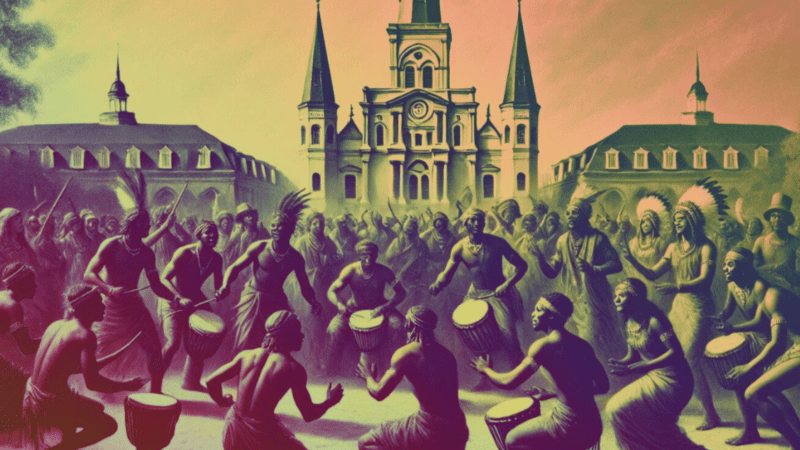
An AI-generated painting depicting African slaves from the Kingdom of Kongo dancing and playing drums in Congo Square, New Orleans. The scene is set in front of the historic St. Louis Cathedral, with a large gathering of people in traditional attire, evoking the vibrant cultural traditions preserved through music and dance.
Essays

Dancing in Congo Square

There is a place in New Orleans called Congo Square. Its name doesn’t come from diplomatic relations or cultural exchange between Congo and USA, but from the suffering and resilience of enslaved Africans, primarily from the Kingdom of Kongo. In the heart of a segregated city, this open space became a sanctuary where, on “free Sundays,” enslaved people and Native Americans could gather to perform sacred rituals, trade goods, share stories, and dance to the rhythms of their ancestral lands. What tourists now celebrate as the birthplace of jazz was once dismissively known as “the Negro place”—a designation that attempted to diminish its significance but inadvertently marked the spot where one of America’s greatest cultural transformations would emerge. This is the story of how a place of oppression became a crucible of creativity, where the traditions of the Kongo Kingdom met Native American customs and European influences to create something entirely new.

No Comments Read More