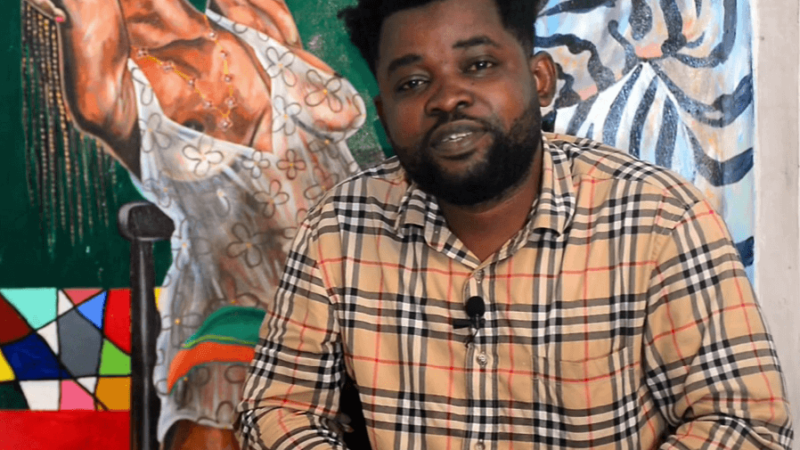
Congolese artist Jonathan Malanda sitting in front of his artwork, wearing a checkered shirt and speaking into a microphone. Behind him, a painting features a woman in a flowing dress with intricate patterns, a zebra motif, and colorful geometric elements, blending realism and abstraction.
Meet the Artwork

“Éternité” by Jonathan Malanda

Jonathan Malanda paints women because, he says, it was through women that his mother inspired him to work. In Éternité (2024, acrylic on canvas, 100 by 110 centimeters), a woman arches on a wooden chair with her face hidden behind her raised arms while a zebra bends its head toward her. In a short video, Malanda says what the painting is for: the love and the ambiance between man and nature.

Read More
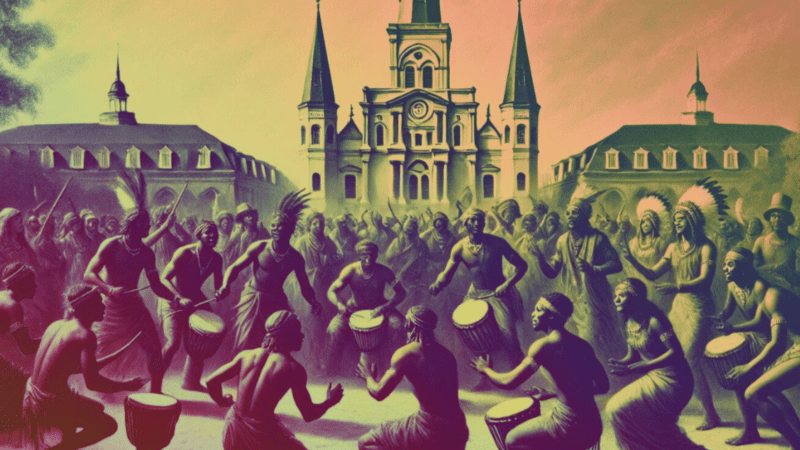
An AI-generated painting depicting African slaves from the Kingdom of Kongo dancing and playing drums in Congo Square, New Orleans. The scene is set in front of the historic St. Louis Cathedral, with a large gathering of people in traditional attire, evoking the vibrant cultural traditions preserved through music and dance.
Essays

Dancing in Congo Square

There is a place in New Orleans called Congo Square. Its name doesn’t come from diplomatic relations or cultural exchange between Congo and USA, but from the suffering and resilience of enslaved Africans, primarily from the Kingdom of Kongo. In the heart of a segregated city, this open space became a sanctuary where, on “free Sundays,” enslaved people and Native Americans could gather to perform sacred rituals, trade goods, share stories, and dance to the rhythms of their ancestral lands. What tourists now celebrate as the birthplace of jazz was once dismissively known as “the Negro place”—a designation that attempted to diminish its significance but inadvertently marked the spot where one of America’s greatest cultural transformations would emerge. This is the story of how a place of oppression became a crucible of creativity, where the traditions of the Kongo Kingdom met Native American customs and European influences to create something entirely new.
No Comments Read More
Congolese Artist and painter Phinet kisimba talking to a camera, in front of his artwork
Meet the Artwork

“Sala Po Ozala” by Phinet Kisimba

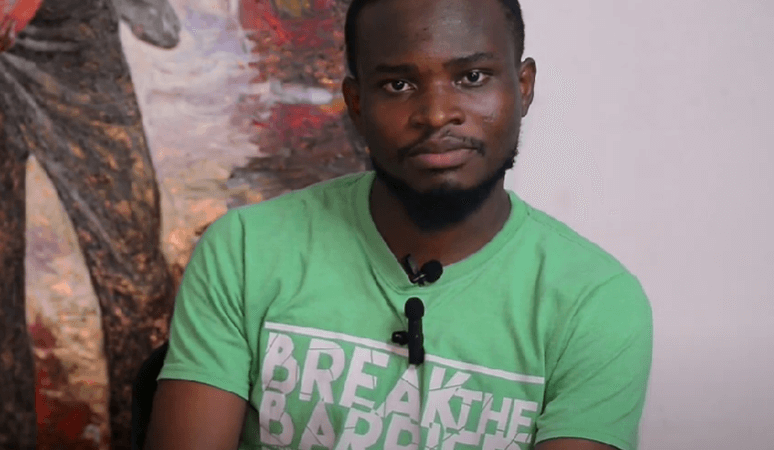
Phinet Kisimba paints what he calls la mathématique du temps, and in Sala Po Ozala (2021, oil on canvas, 90 by 160 centimeters) he paints it as a clock face with a young Kinois standing inside it: white shirt, polished shoes, both pockets pulled inside out. In a short video, he says what the picture asks of Kinshasa’s youth: be true, and let time testify.

No Comments Read More
Glory Kanga talking about his new artwork: Return to the nature
Meet the Artwork

“Recours à la Tradition” by Glory Kanga

Glory Kanga calls himself an artiste classicien écologiste and has committed his painting entirely to the bond between man and the environment. In Recours à la Tradition (acrylic on canvas, 150 by 130 centimeters), a man woven from strips of wood bends over a steaming basin, head under a cloth. In a short video, Kanga explains the likeness of life that holds the painting together.

No Comments Read More
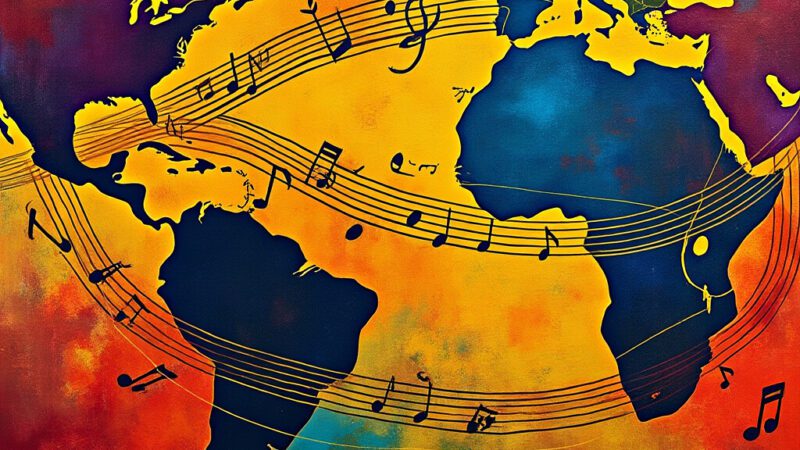
A vibrant artistic representation of a world map, focusing on Africa and the Americas, with flowing musical notes connecting the continents. The warm color palette of yellow, red, and blue symbolizes cultural exchange, particularly the African influence on music genres across the Atlantic, such as jazz, blues, rumba, and reggae.
Essays

The Cultural Odyssey of Congolese Rumba

Born in Central Africa, transformed in Cuba’s plantations, and reborn in Kinshasa’s streets, Congolese rumba carries centuries of history in its rhythms. From Wendo’s “Marie-Louise” to Fally Ipupa’s modern interpretations, discover how a sacred dance became a global cultural treasure that continues to move hearts and feet across continents.
Whether you’re already dancing to Franco’s guitar solos or have never heard of Papa Wembe, this story will transform your understanding of this remarkable music. Beyond the infectious rhythms lies a tale of cultural resilience and creative fusion that crossed oceans and centuries to become the soundtrack of generations. So settle in, maybe put on some rumba, and join us on this cultural odyssey.

No Comments Read More
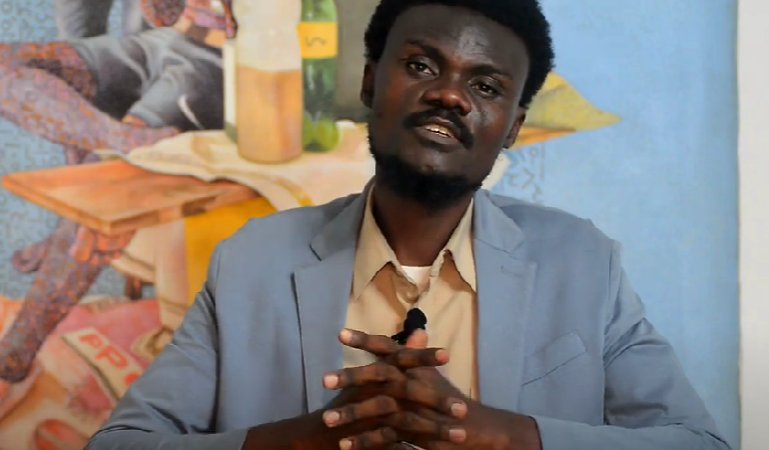
Congolese artist Junior Bile sitting in front of his artwork, wearing a light blue blazer and beige shirt. He has a thoughtful expression with his hands clasped together, speaking into a microphone. Behind him, a detailed painting depicts everyday life, with a table, bottles, and a seated figure dressed in vibrant patterns.
Meet the Artwork

“La Croyance dans l’Ombre” by Junior Bile

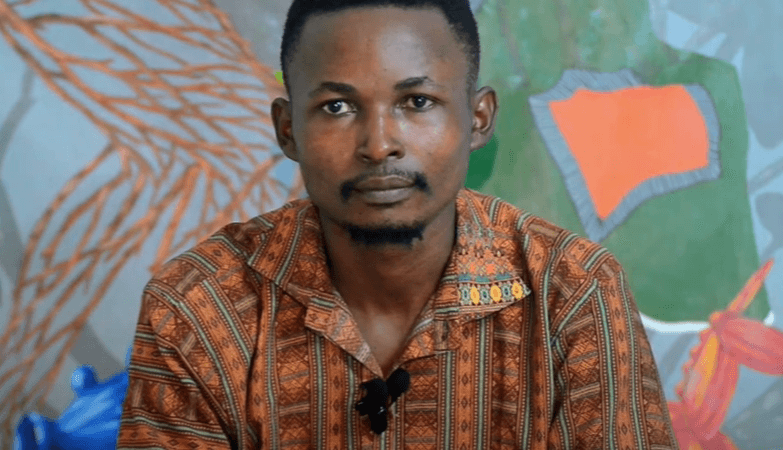
Junior Bile photographs the children of Kinshasa’s quartiers populaires, paints them, and covers their skin in stenographic script he calls vows, prayers, and scars. In a short video, he explains the method and the thinking behind La Croyance dans l’Ombre (2022), oil and acrylic on canvas.

Read More
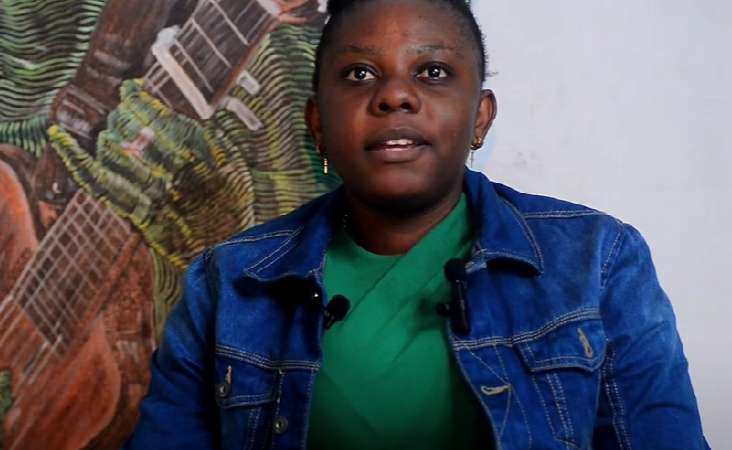
"Congolese artist Sarah Ndangi wearing a green top and a denim jacket, speaking into a microphone with a focused expression. Behind her, a painting features a detailed depiction of hands playing a guitar, emphasizing a musical theme in her artwork.
Meet the Artwork

“Exprime-Toi” by Sarah Ndangi Bunga

Meet the Artwork is a new series on single works of Congolese art. Each entry pairs one piece with its maker’s own account of what it is and why it exists. We begin with Exprime-Toi, a 2023 acrylic by Sarah Ndangi Bunga, a painting about fear, music, and learning to speak in front of other people.

Read More
Zongo Falls. From inkisi River. Near to Kinshasa in the democratic republic of congo DRC
Essays

Zongo Falls: The Cradle and the Grave

We went to Zongo years ago and left thinking we saw a beautiful landscape. What we did not know was that we were standing on sacred ground.
In Kongo memory, this stretch of forest and river is remembered as a beginning of humanity. And as the grave of the religion that declared it sacred.

No Comments Read More
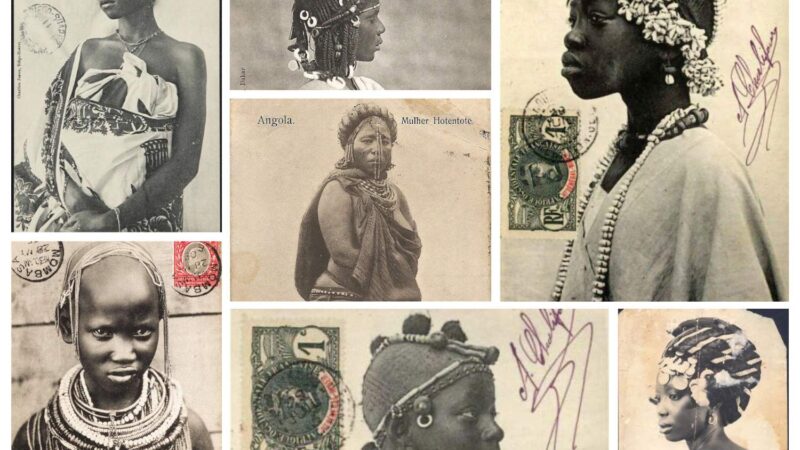
Different photos of african women as postcard during colonial times
Essays

The Woman on Every Wall: Exoticism and plagiarism in the Congolese art market

Spend an afternoon in the galleries of Kinshasa and you begin to recognize the same woman. She is on one wall, then the next, then the gallery down the street, the ornament changed each time, the face never. She has no name on the wall, and no one expects her to. She is a type, and the type sells. Many of these faces were traced from photographs of women who never agreed to sit, then sold as original work. No one has asked the woman behind the painting who she is.

Pinned
No Comments Read More
Cheri Cherin at his atelier in masina kinshasa
Interviews

Chéri Chérin – The Interview: A Journey Through Art, Activism, and “Peinture Populaire”

Join us in exploring the profound world of Grand Maître Chéri Chérin, a pivotal figure whose legacy transcends his art to shape Congolese culture. Through an insightful interview, we explore the life of Chérin, the visionary mentor behind “Peinture Populaire.” His influence, from Kinshasa’s studios to the international scene, highlights his role in nurturing talents and pioneering a movement. Discover Chérin’s journey, challenges, and triumphs, revealing how his commitment to mentorship and art is crafting a future for new generations. Dive into the essence of Chéri Chérin’s enduring impact

Read More
in an interview with sculpture libende today
Interviews

Sculpting Dreams: A Conversation with the Visionaries of “Sculpture Libende Today”

In an exclusif conversation within the vibrant heart of Kinshasa’s art scene, we dive deep with the innovative minds behind “Libende Today”. Amidst the backdrop of towering metal sculptures and the atmosphere thick with creativity, the founders passionately unveil the essence of their collective. They speak of dreams that lay the groundwork of reality, the power of independence while embracing collaboration, and the paramount importance of the artist, not just the art. The narrative isn’t just about magnificent sculptures—it’s about carving a space for artists in today’s world, giving life to their dreams, and the mutual exchange of thought and vision across continents. This isn’t just an interview; it’s an exploration of the soul behind “Libende Today”, a celebration of their unique spirit and philosophy.

Read More
Faces of famous congolese female musicians
Essays

The Women Rumba Left Behind

How many Congolese female rumba singers can you name? Most readers get stuck at two or three. The 1980s had six women working at the top of the genre at the same time. The 2020s have two. This article walks through seventy years of female voices in Congolese rumba, from Lucie Eyenga, who recorded in 1950s Léopoldville, to Cindy le Cœur, who fronts Koffi Olomide’s Quartier Latin now, and asks what these women had to do to be heard, and why so few are still doing it.

Read More