The untold story of antoinette lubaki
Essays

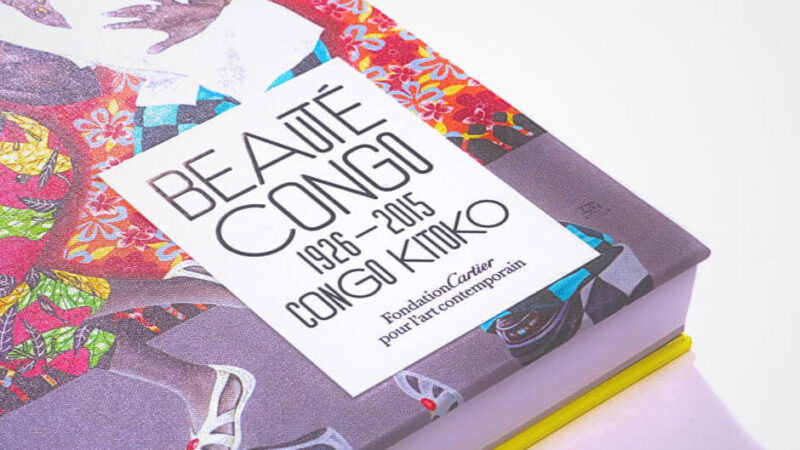
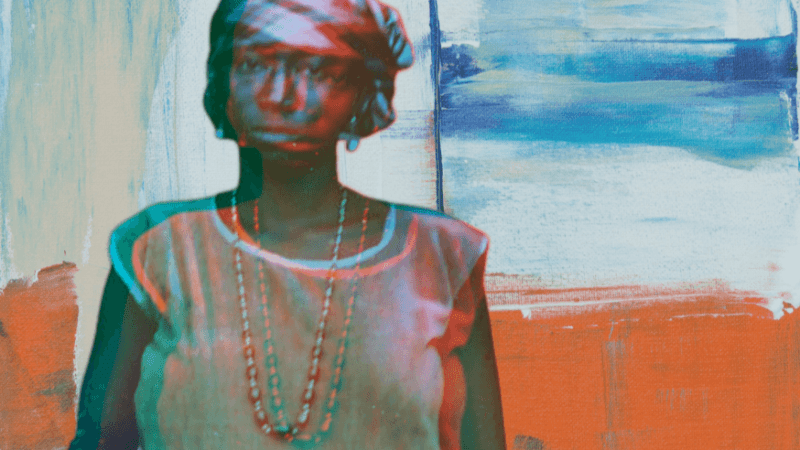
The Untold Story of Antoinette Lubaki: Congo’s Avant-Garde Female Artist

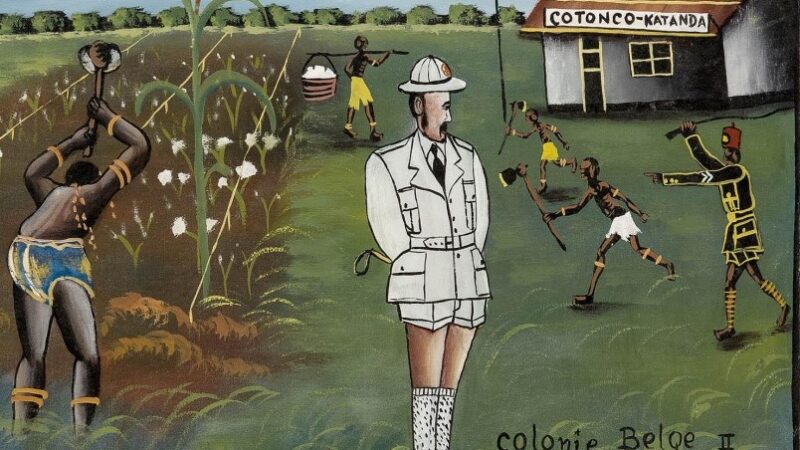
Antoinette Lubaki painted in colonial Katanga in the 1920s alongside her husband Albert. Their watercolors traveled to Brussels, Geneva, and Paris, and were filed under his name. What the colonial archive missed was a partnership in which the visual language came from her side, carried from the mural tradition she grew up in into a marriage that worked as one. This article traces what their work actually was, how it was absorbed into a single masculine signature, and what an honest recovery looks like when the goal is not to flip the erasure but to retire it.

1 Comment Read More
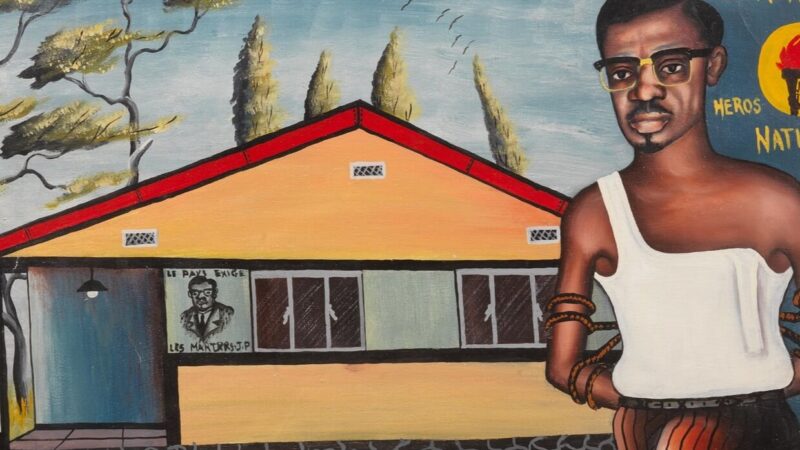
A painting by Tshibumba Kanda Matulu depicting Patrice Lumumba, bound and wearing a torn white tank top, standing in front of a house. The artwork includes text honoring Lumumba as a national hero and references his unmarked grave in Lubumbashi.
Essays

A Visual Tour of Congo History (Part 2): Patrice Lumumba – The Making of an African Legend

Through TKM’s extraordinary paintings, we pay homage to Patrice Lumumba, 64 years after his assassination. Here was a man whose words proved so dangerous that his enemies not only killed him, but tried to erase every trace of his existence – dissolving his body in acid and mysteriously “losing” nearly all recordings of his powerful speeches. Malcolm X called him “the greatest black man who ever walked the African continent,” yet his story remains surprisingly undertold. Following TKM’s visual testament, we uncover the journey of an African hero who dared to speak truth to power, who fought with words rather than weapons, and whose vision of true independence was so threatening that even six decades later, we’re still discovering how thoroughly his voice was suppressed. This is not just a retelling of history, but a tribute to a man whose dream of African dignity and real freedom remains as vital today as it was in 1961.

No Comments Read More
A painting by tshibumba kanda-matulu (TKM) about belgian rule in Congo called: Culture obligatoire
Essays

A Visual Tour of Congo History (Part 1): From Stanley to Belgian Rule

Through five striking paintings by Congolese artist Tshibumba Kanda Matulu, discover how colonial power was established in Congo, from Stanley’s first arrival to Belgian rule. His artwork reveals the calculated stages of colonial control: exploration, betrayal, deception, and systematic elimination of indigenous power. This visual journey through history, seen through Congolese eyes, reveals how one of history’s most brutal colonial enterprises was built – and the extraordinary resilience of those who endured it. More than historical documentation, these paintings offer a uniquely Congolese perspective on events usually told by Western voices.

No Comments Read More
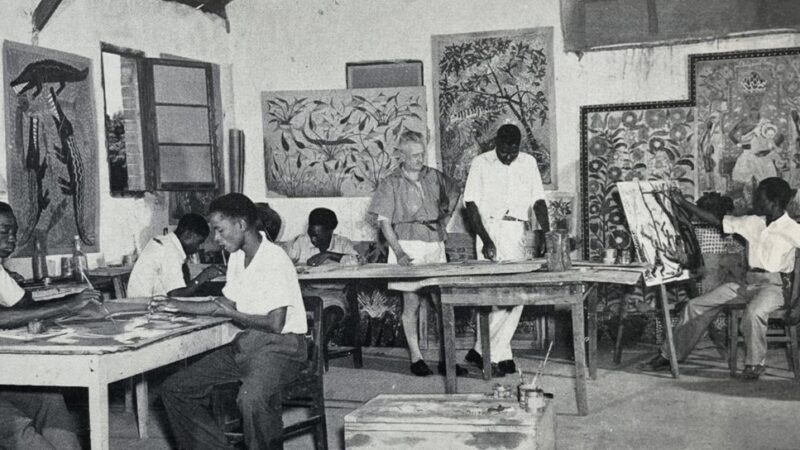
Pierre Romain-Desfossés and famous congolese painters at Le Hangar art workshop in Lubumbashi DRC
Essays

The Illusion of Art: Le Hangar and the Colonial Propaganda

Have you encountered yet another glowing tribute to “Le Hangar,” the supposed birthplace of modern Congolese art? Open any book about Congolese art history and three colonial names inevitably dominate the narrative: Georges Thiry, Pierre Romain Desfosses, and Laurent Moonens – as if Congolese art began with their “discovery.” This persistent colonial lens transforms art histories into tributes to European “mentors,” erasing centuries of pre-existing artistic traditions. Behind Le Hangar’s carefully curated image lies a darker truth: it served both as Belgium’s desperate attempt to rebrand its brutal colonial image into that of a “cultural protector,” and as a sophisticated system for controlling and profiting from Congolese art.
This essay examines both local and global contexts to expose how Le Hangar served not as an artistic sanctuary, but as a tool of colonial propaganda and economic exploitation—a reality that still shapes how Congolese art history is told today.

No Comments Read More
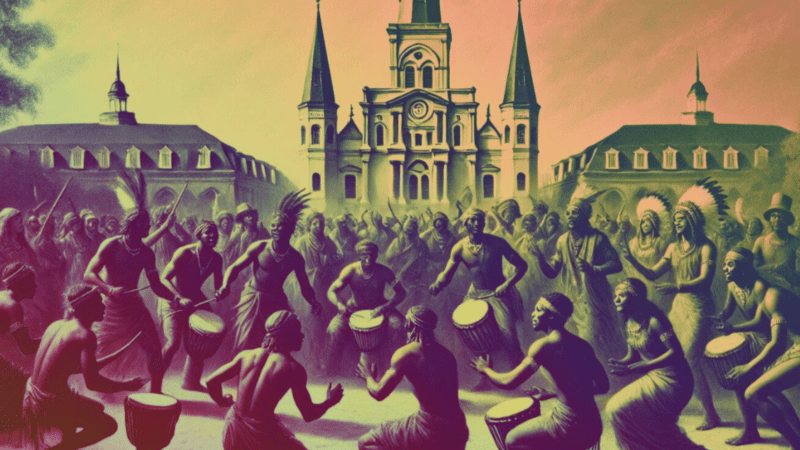
An AI-generated painting depicting African slaves from the Kingdom of Kongo dancing and playing drums in Congo Square, New Orleans. The scene is set in front of the historic St. Louis Cathedral, with a large gathering of people in traditional attire, evoking the vibrant cultural traditions preserved through music and dance.
Essays

Dancing in Congo Square

There is a place in New Orleans called Congo Square. Its name doesn’t come from diplomatic relations or cultural exchange between Congo and USA, but from the suffering and resilience of enslaved Africans, primarily from the Kingdom of Kongo. In the heart of a segregated city, this open space became a sanctuary where, on “free Sundays,” enslaved people and Native Americans could gather to perform sacred rituals, trade goods, share stories, and dance to the rhythms of their ancestral lands. What tourists now celebrate as the birthplace of jazz was once dismissively known as “the Negro place”—a designation that attempted to diminish its significance but inadvertently marked the spot where one of America’s greatest cultural transformations would emerge. This is the story of how a place of oppression became a crucible of creativity, where the traditions of the Kongo Kingdom met Native American customs and European influences to create something entirely new.

No Comments Read More
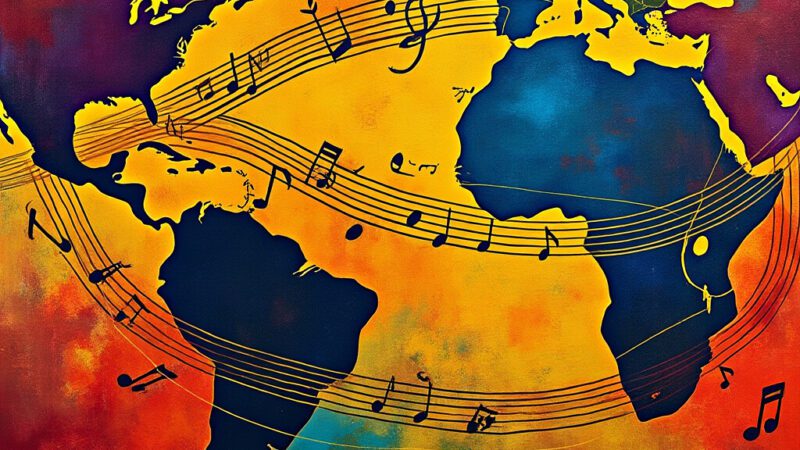
A vibrant artistic representation of a world map, focusing on Africa and the Americas, with flowing musical notes connecting the continents. The warm color palette of yellow, red, and blue symbolizes cultural exchange, particularly the African influence on music genres across the Atlantic, such as jazz, blues, rumba, and reggae.
Essays

The Cultural Odyssey of Congolese Rumba

Born in Central Africa, transformed in Cuba’s plantations, and reborn in Kinshasa’s streets, Congolese rumba carries centuries of history in its rhythms. From Wendo’s “Marie-Louise” to Fally Ipupa’s modern interpretations, discover how a sacred dance became a global cultural treasure that continues to move hearts and feet across continents.
Whether you’re already dancing to Franco’s guitar solos or have never heard of Papa Wembe, this story will transform your understanding of this remarkable music. Beyond the infectious rhythms lies a tale of cultural resilience and creative fusion that crossed oceans and centuries to become the soundtrack of generations. So settle in, maybe put on some rumba, and join us on this cultural odyssey.

No Comments Read More
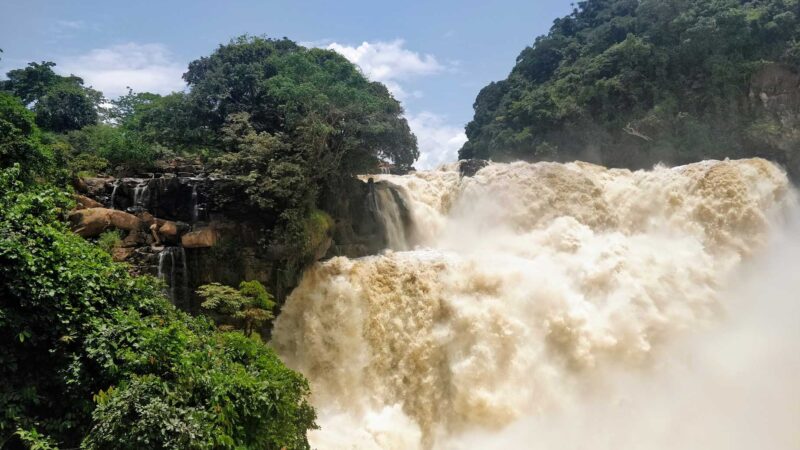
Zongo Falls. From inkisi River. Near to Kinshasa in the democratic republic of congo DRC
Essays

Zongo Falls: The Cradle and the Grave

We went to Zongo years ago and left thinking we saw a beautiful landscape. What we did not know was that we were standing on sacred ground.
In Kongo memory, this stretch of forest and river is remembered as a beginning of humanity. And as the grave of the religion that declared it sacred.

No Comments Read More
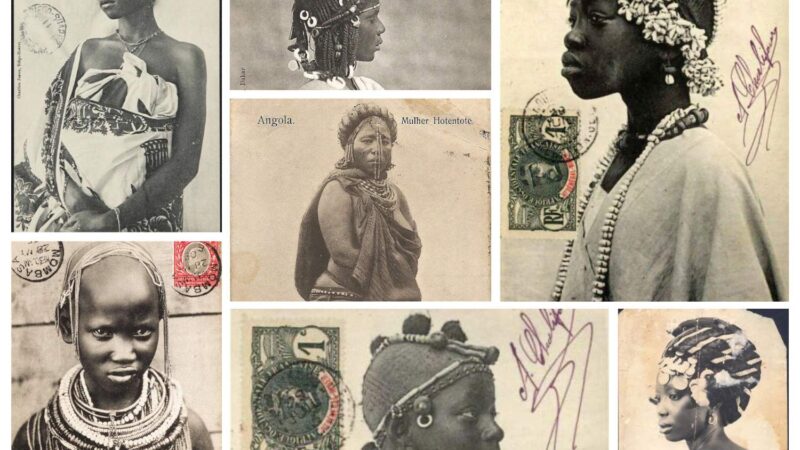
Different photos of african women as postcard during colonial times
Essays

The Woman on Every Wall: Exoticism and plagiarism in the Congolese art market

Spend an afternoon in the galleries of Kinshasa and you begin to recognize the same woman. She is on one wall, then the next, then the gallery down the street, the ornament changed each time, the face never. She has no name on the wall, and no one expects her to. She is a type, and the type sells. Many of these faces were traced from photographs of women who never agreed to sit, then sold as original work. No one has asked the woman behind the painting who she is.

Pinned
No Comments Read More
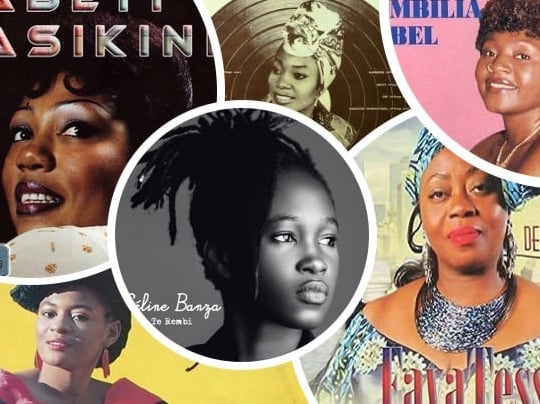
Faces of famous congolese female musicians
Essays

The Women Rumba Left Behind

How many Congolese female rumba singers can you name? Most readers get stuck at two or three. The 1980s had six women working at the top of the genre at the same time. The 2020s have two. This article walks through seventy years of female voices in Congolese rumba, from Lucie Eyenga, who recorded in 1950s Léopoldville, to Cindy le Cœur, who fronts Koffi Olomide’s Quartier Latin now, and asks what these women had to do to be heard, and why so few are still doing it.

Read More
Painting by Chéri Samba showing Picasso drawing at a blue grid table while another artist sits behind African masks, under the title "Quel avenir pour notre art ?"
Essays

11 Congolese Painters Who Redefined African Art

From history painters working with colonial-era restrictions to modern visionaries crafting Afrofuturistic dreamscapes, Congolese artists have long been revolutionaries with a brush. Meet thirteen painters who transformed limitations into liberation: Tshibumba Kanda-Matulu, who dared to paint Congo’s painful history under Mobutu’s watchful eye; Chéri Samba, whose neon-bright satires caught the world’s attention; Pilipili Mulongoy, who turned colonial constraints into masterpieces of motion; and Monsengo Shula, who dresses astronauts in traditional pagne as they drift through cosmic realms.
Yet this is more than just a journey through Congo’s artistic past—it’s a gateway to its future. As we at Kitokongo scour Kinshasa’s vibrant neighborhoods and beyond, we’re discovering the next generation of visionaries, artists who are redefining what Congolese art can be. Join us in exploring not just who these painters were and are, but who they’re becoming. Because in Congo, every artwork is both a survival story and a revolution waiting to happen.

3 Comments Read More
Lots of Congolese masks lying on top of each other
Essays

Behind Glass: Congolese Masks and the Question of Belonging

Behind the glass of European museums, Congolese masterpieces sit frozen under generic tribal labels. But a mask was never just an object; it was a living event, a social relationship, and the work of a brilliant individual creator. While Western art history spends centuries naming its own anonymous masters, the search for Congolese sculptors was quietly abandoned. Reclaiming Congolese authorship means rejecting the grammar of property and restoring names, lineages, and agency to these works. The masters did not run out; the searching did. It is time to shatter the vitrine and rewrite the story.
Let me tell you this: those masks are everything but primitive, and their living power was never meant to be silenced behind museum glass.

They were the living voice of ancestral wisdom. They danced. They judged. They healed. They were alive. This is the story of their stolen power and their fight to finally come home.

No Comments Read More
4 women wearing pagne in the streets of kinshasa
Essays

Pagne: More Than Fashion

In Congo, pagne feels at home. It belongs to mothers and aunties, to weddings and mourning, to church and family. Few think of Indonesia, Dutch factories, or European trade routes. Yet wax-resist came from Java, printing from Dutch and English mills, and many patterns from Indonesia. This print was not born in Africa. The African story begins after printing: in the market, the naming, the tailoring, the ceremony, the body. The cloth came off a machine. The garment did not. It was talked into being.

No Comments Read More