Skip to content
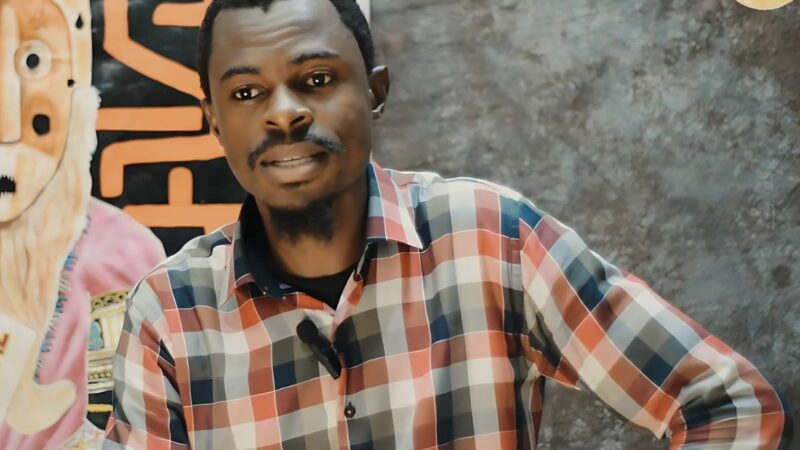
Congolese artist and painter Billy Gibula wearing a plaid shirt, speaking with a focused expression. Behind him, a painting featuring a stylized mask and bold orange text is partially visible.
Portraits

Beyond Tribal Lines: Billy Gibula’s “Non au Tribalisme”

A powerful call for unity through art, Billy Gibula’s “Non au Tribalisme” confronts tribal division with striking symbolism. Through vibrant patterns, a traditional mask-like figure, and meaningful details like a purple parrot perched on wisdom’s shoulder, the co-founder of Kitokongo weaves a visual message of shared humanity and love that transcends ethnic boundaries. Click the link and explore the full story behind this compelling artwork.
No Comments Read More
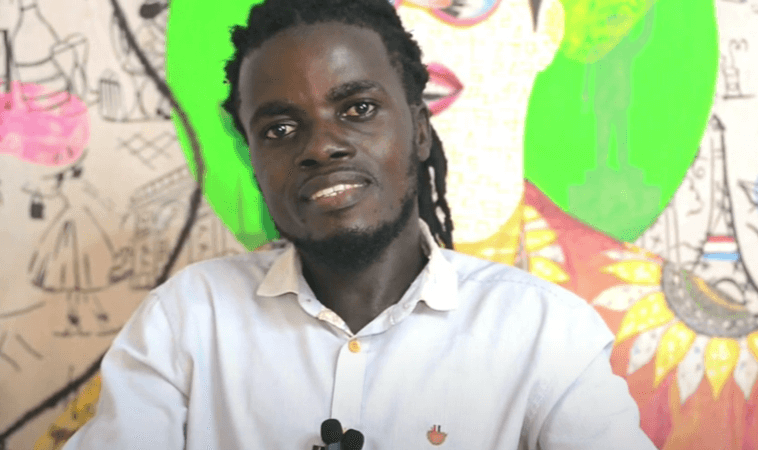
Congolese artist Winnart Nsangu wearing a white shirt, sitting in front of a colorful artwork featuring a stylized face with vibrant green and yellow elements. He has a warm smile and a relaxed posture, with a microphone clipped to his shirt.
Portraits

When Kinshasa Calls: Winnart Nsangu’s “Kin Eza Mboka Na Nga”

To kick off 2025, we present “Kin Eza Mboka Na Nga” (Kinshasa is My City) by Winnart Nsangu. This mixed-media painting features a charismatic figure whose eyes literally burst through their glasses with love for Kinshasa, while Paris sketches fade into the background. Through vibrant colors and bold symbolism, Nsangu captures the enduring connection to one’s roots. Discover the full story of this exceptional artwork.

Read More
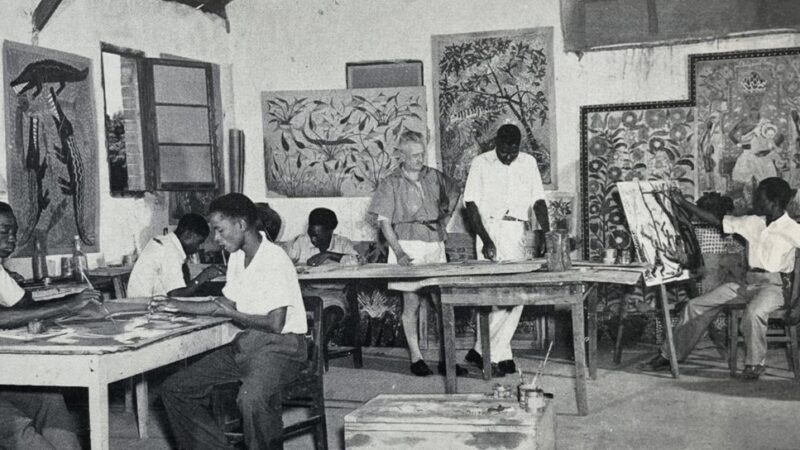
Pierre Romain-Desfossés and famous congolese painters at Le Hangar art workshop in Lubumbashi DRC
Investigations

The Illusion of Art: Le Hangar and the Colonial Propaganda

Have you encountered yet another glowing tribute to “Le Hangar,” the supposed birthplace of modern Congolese art? Open any book about Congolese art history and three colonial names inevitably dominate the narrative: Georges Thiry, Pierre Romain Desfosses, and Laurent Moonens – as if Congolese art began with their “discovery.” This persistent colonial lens transforms art histories into tributes to European “mentors,” erasing centuries of pre-existing artistic traditions. Behind Le Hangar’s carefully curated image lies a darker truth: it served both as Belgium’s desperate attempt to rebrand its brutal colonial image into that of a “cultural protector,” and as a sophisticated system for controlling and profiting from Congolese art.
This essay examines both local and global contexts to expose how Le Hangar served not as an artistic sanctuary, but as a tool of colonial propaganda and economic exploitation—a reality that still shapes how Congolese art history is told today.

No Comments Read More

Sign In

Register

Reset Password

Please enter your username or email address, you will receive a link to create a new password via email.