Patrick Kusakana
About
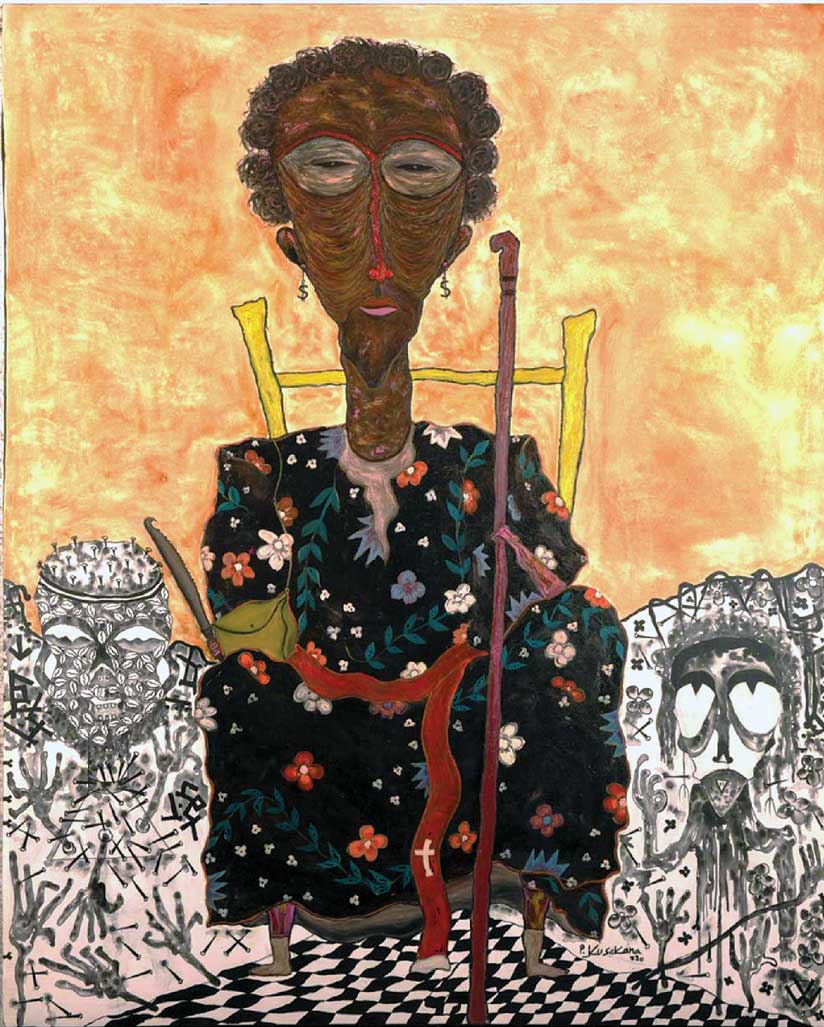
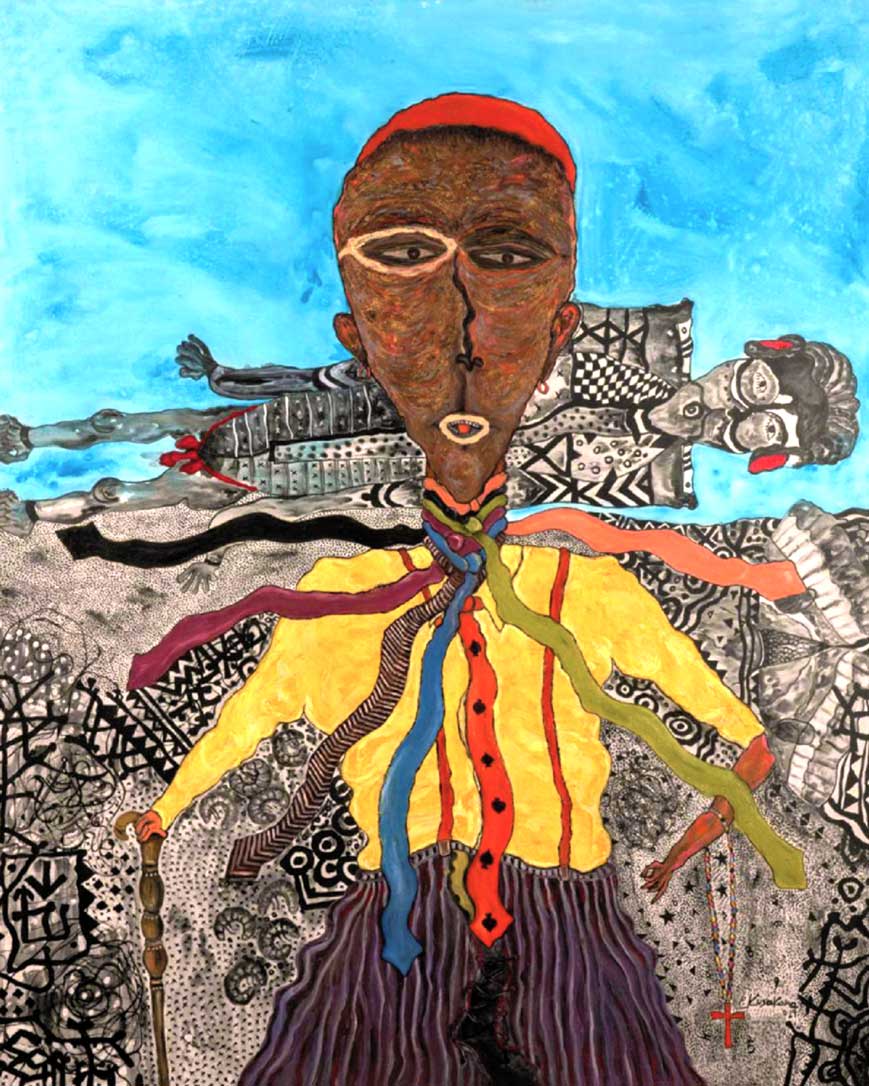
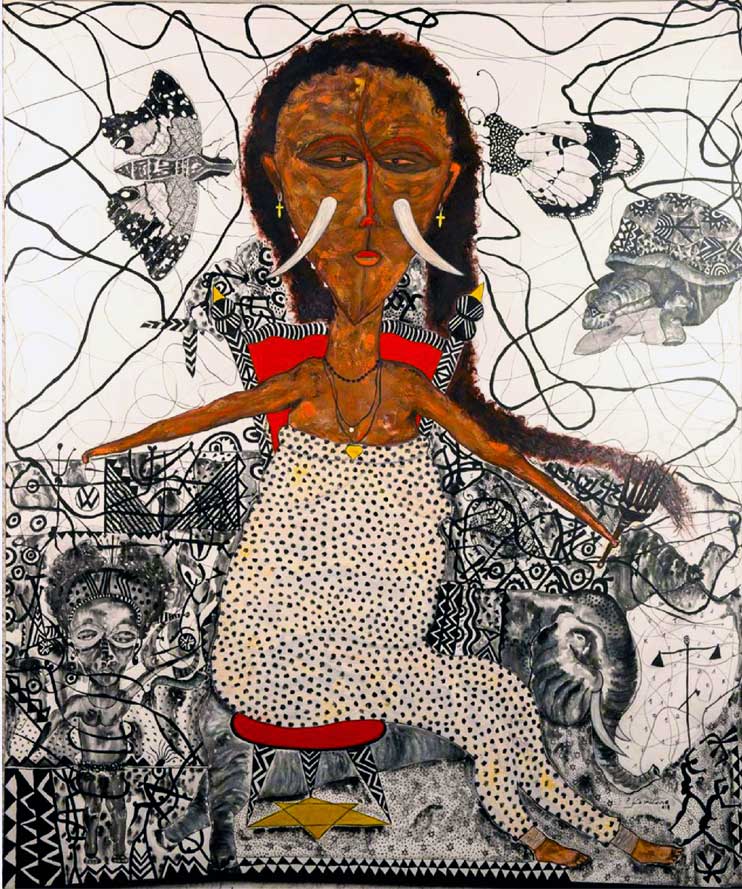
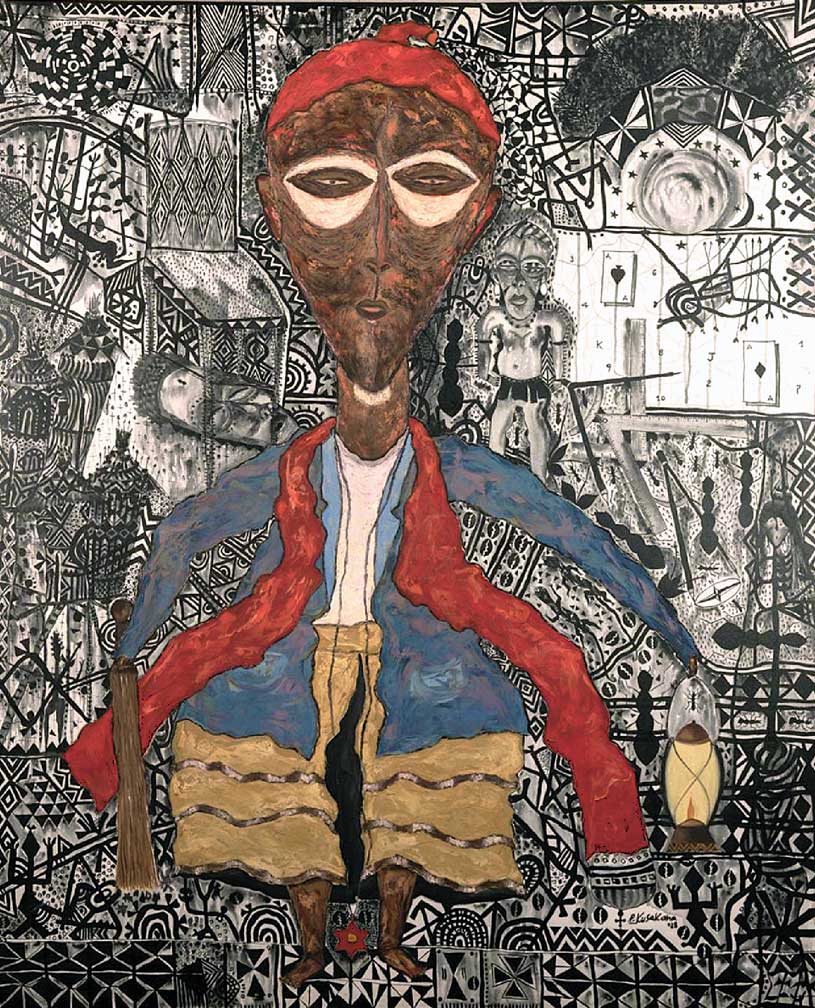
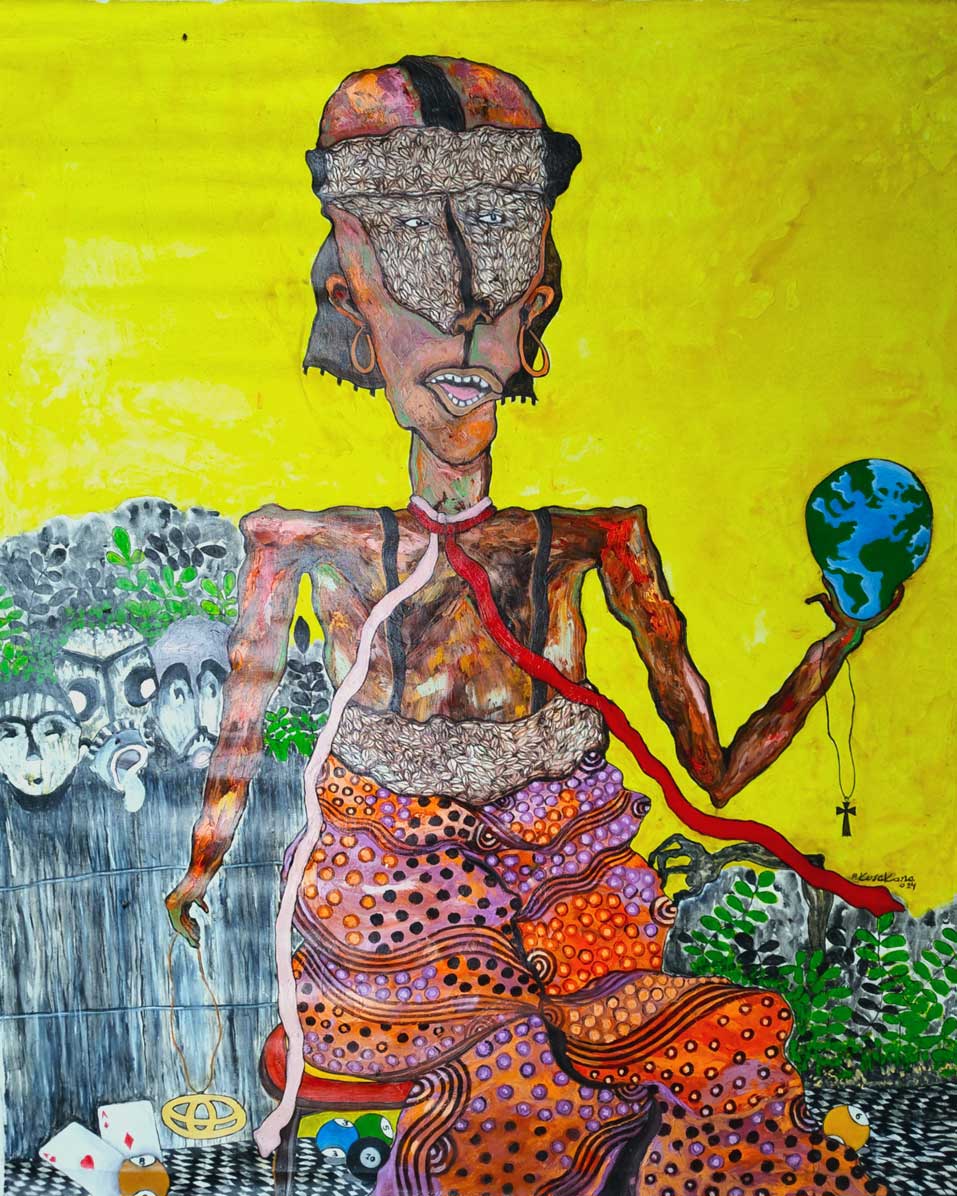
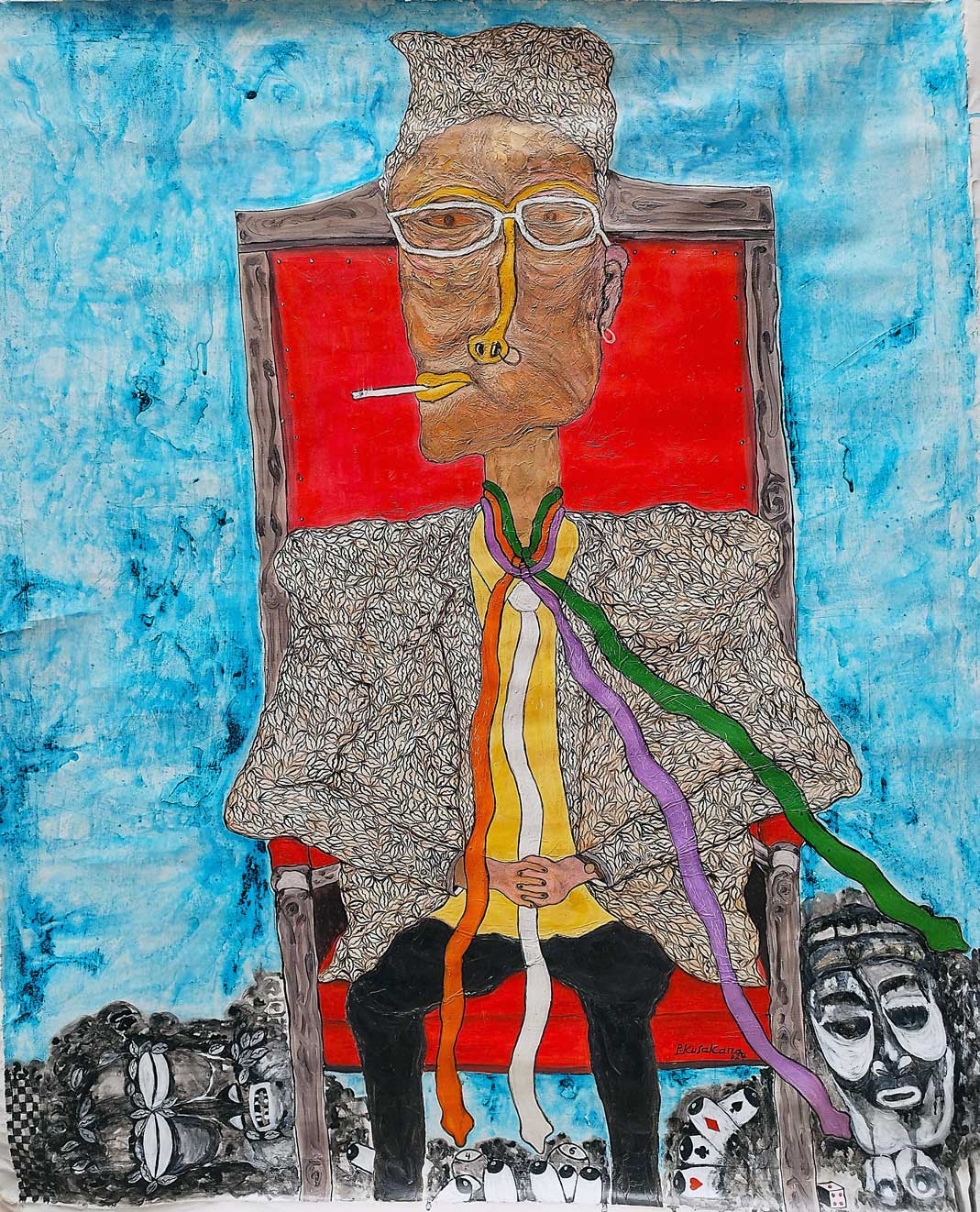
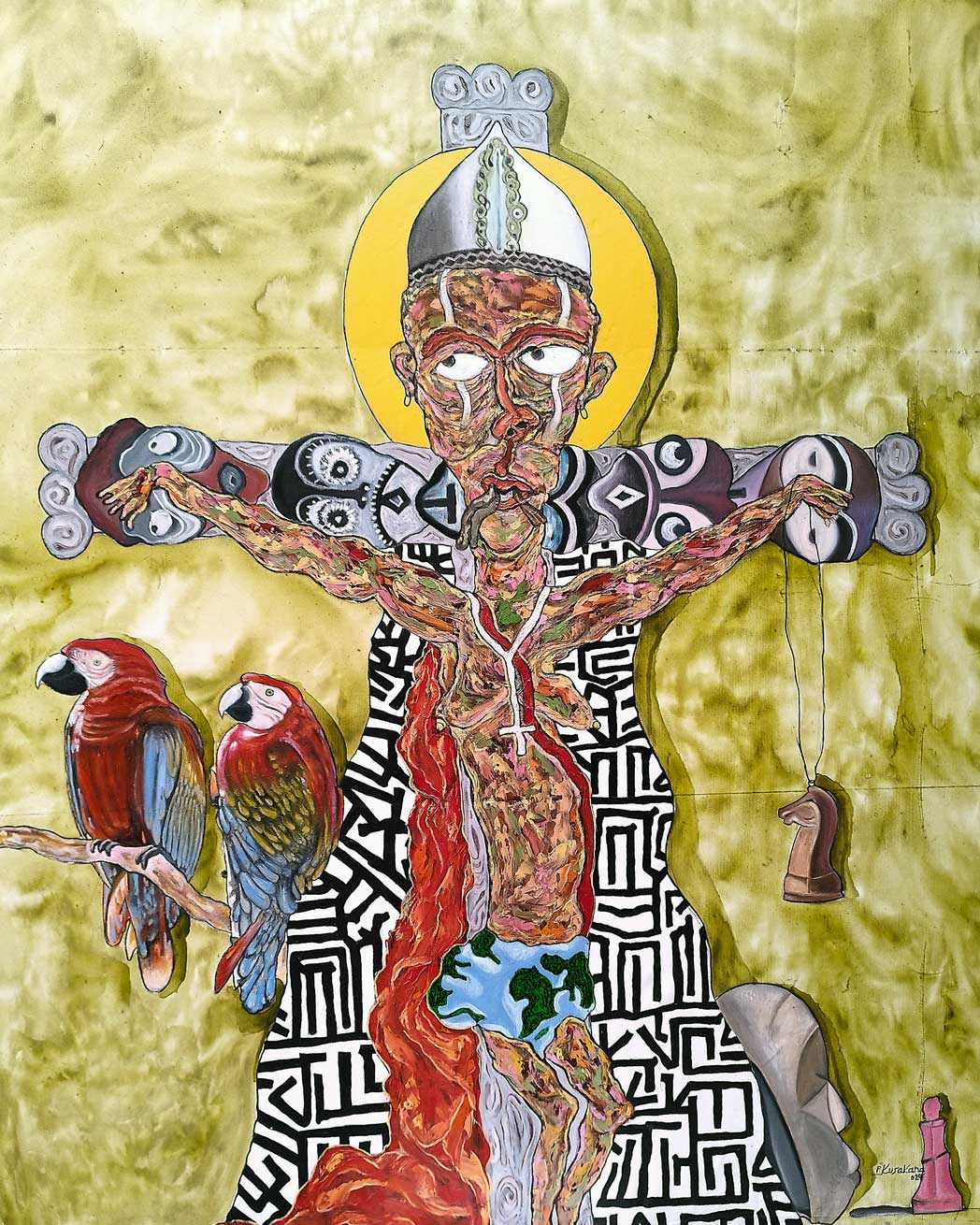
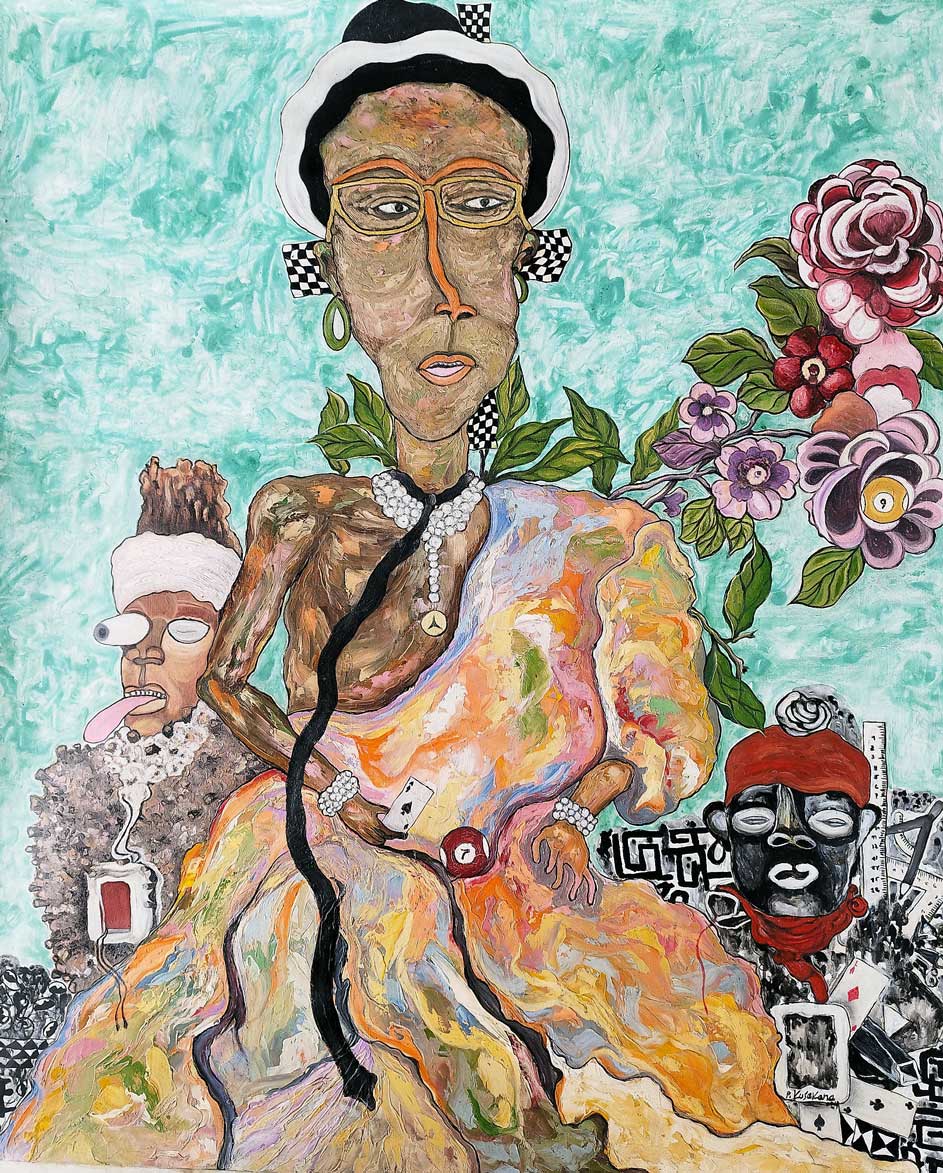
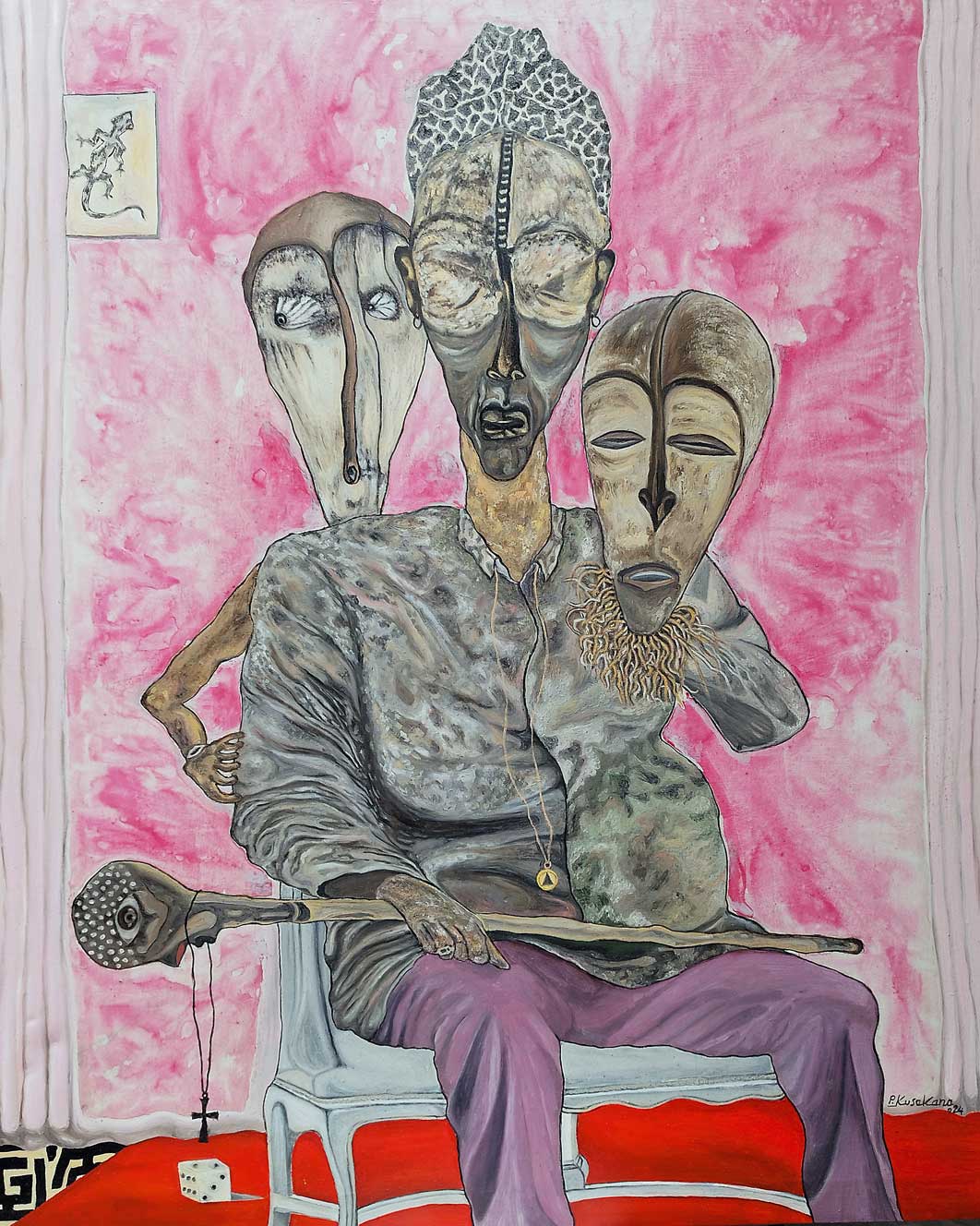
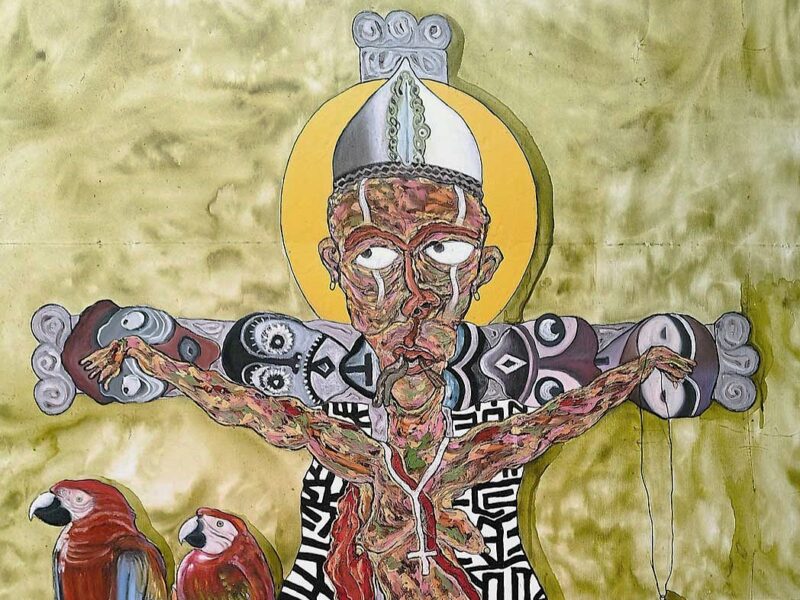
Patrick Kusakana, born June 26, 1975, in Kinshasa, is a Congolese contemporary artist working in painting, performance, and installation, and his theme, in his own single word, is power. Ancestral, African power, and specifically the power of the Bakongo: Kusakana is Mukongo, and the symbols through which Kongo authority once spoke, masks, geometry, regalia, run through everything he makes. His painting is figurative, built on slightly deformed characters in saturated color, with pyramids and masks behind the forms.
His start was a family matter. A brother saw the talent early and pushed. Kusakana trained at the Académie des Beaux-Arts in Kinshasa, then in the studio of Roger Botembe, and left to found an atelier of his own on the family parcelle, where he now mentors young artists on one condition the academy never offered: they keep their own styles.
The politics are in the pictures, in code. His recurring symbols, neckties, card games, and other marked objects, carry critiques of power, imperialism, and colonialism that a viewer without the key can mistake for appreciation; those versed in Congolese history read the second layer. The comparison to Picasso’s cubism is one Kusakana makes himself, and he is entitled to it twice over. The deformed figures and stacked geometries justify it on sight, and the history runs in his favor: Picasso learned that language from African masks, the same masks Kusakana inherits directly. He describes himself as a revolutionary and a mystic, an initiated who keeps memory and transmits ancestral symbols, and he paints pictures that give up more the longer they are looked at.
His work has traveled internationally, and Kitokongo has followed it from close by: his painting Queen Mambueni, ancestral power built around the figure of his grandmother, a healer, is the subject of one of the site’s Meet the Artwork features. This page gathers Patrick Kusakana in one place online: the portfolio is below, and the paintings keep their own counsel better than any summary of them can.
Portfolio